With Earth Day fast approaching, and spring drawing us outdoors, this seems the perfect time to celebrate the natural world around us. Here are a few of my favorite ways to celebrate all that nature has to offer.
1. Stomp in puddles.
2. No puddles? Play with ice. Or mud.
3. Collect leaves and sort them by size, shape, color, or...?
4. Collect natural materials outside, and use them to make mandalas.
5. Sort natural items into things that are seeds, and things that are not. You might find some surprises!
6. Create temporary art.
7. Make a tic tac toe board with sticks, and use rocks & leaves as playing pieces. Find sticks that look like letters.
8. Lay in the grass and look at clouds.
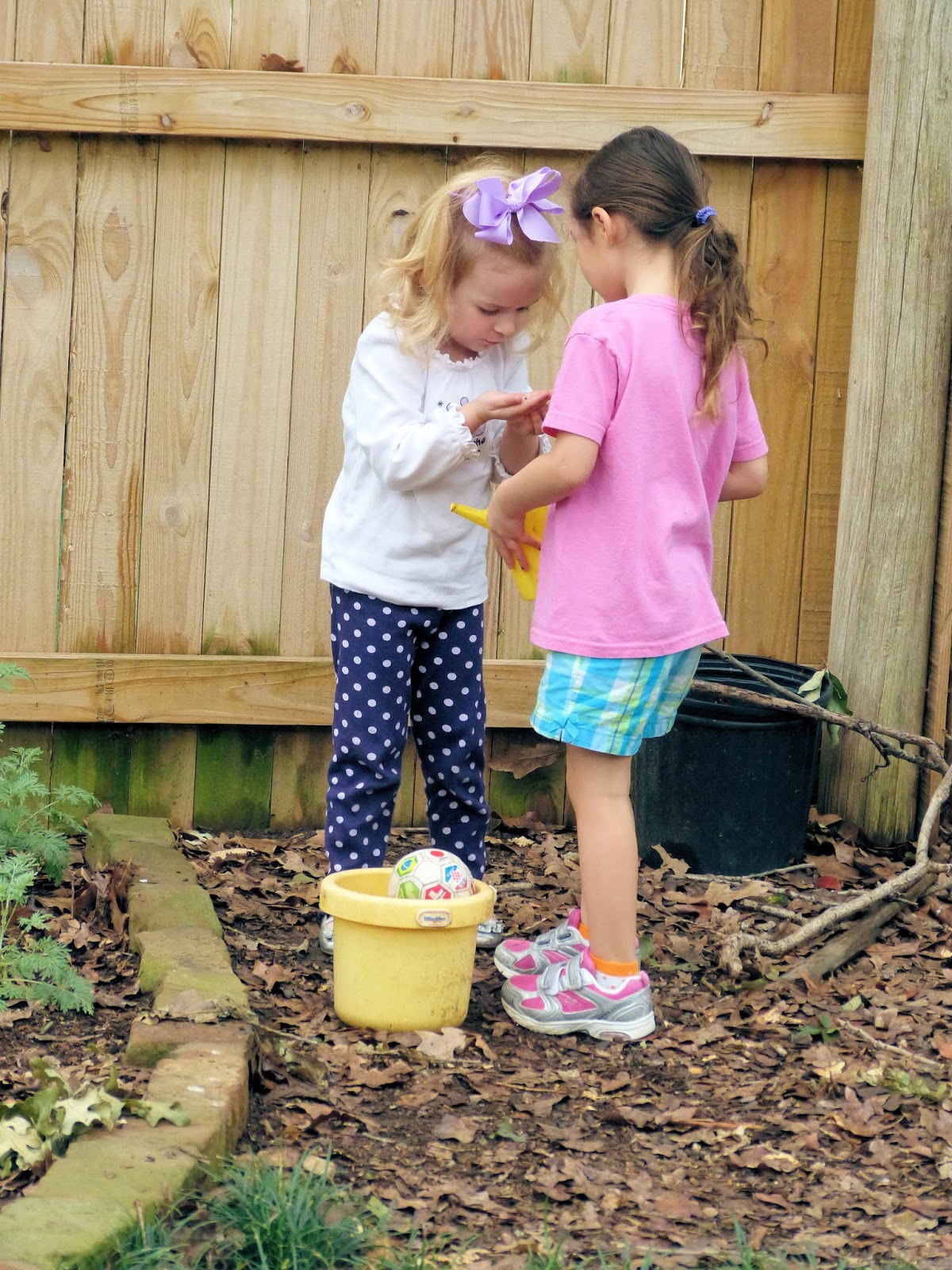
9. Look closely at the world around you. Take a magnifying glass and a notebook, and see what you can observe about the critters and world around you.
10. Play in the dirt. Plant things. Watch them grow.
11. Take your inside learning outdoors. Read books under a tree, practice patterns on the playground (up/down, left/right),
count everything,
look for shapes,
play I Spy, write your spelling words in chalk, or paint them with water on the sidewalk, practice numbers with hopscotch.
Most importantly, think outside the box that is your classroom, put your neck out, and explore.
Wishing you a glorious time outside!
xo Paula
I love teaching and learning with young children, this is where I share my ideas.
Welcome to Paula's Primary Classroom! This blog is where I share ideas for teaching and learning with families, friends and other early childhood educators. Please don't use the photos or text of this blog without permission, but please do use any ideas you find useful. Thank you for stopping by!
Showing posts with label outside play. Show all posts
Sunday, April 15, 2018
Sunday, April 2, 2017
14 of the best ways to get your students to practice spelling
This week a friend mentioned how painful it is to do spelling homework with her daughter. She's tried a lot of things: writing the words, putting the words in sentences, flashcards, but nothing seems to help, and it's torture for both of them. Sound familiar? Well, I'm here to tell you that spelling practice does not have to be painful! You can also use these fun ideas to practice sight words, math facts, or anything that needs to be memorized.
1. Write those words! "Yeah, done that, hate it," you say? I bet you weren't writing them in a layer of sprinkles on a cookie sheet! How about writing them in chocolate sauce or honey on a plate? (If When you spell each word correctly, you get to lick your finger.) How about a layer or salt or flour on a tray? Or using tic tac candies to make each word? Once you start thinking about it, you'll come up with a lot of fun ways to practice!
2. Text them. Tell me your elementary age kiddos don't want to use their phones - or yours! Have them sit with you while you're cooking dinner/ grading papers/ reading a book, and let them type and text those sight words to you or a family member. Limited text plan? Try emailing them!
3. Learn the sign language alphabet and have your child finger spell their spelling words. Here's a cute video to help you learn!
4. Use magnetic letters to make the words on your refrigerator, a cookie sheet, the side of a filing cabinet... so many options!
5. Write the words in shaving cream. My kiddos LOVED writing and drawing in shaving cream, so we always did this to clean the tables in our classroom. Simply spray a blob of foam on the table, then let the children smooth it out on the table top, then write in the it. A quick hand swipe erases and resets the foam for the next word. When you're done, your table top will be clean, the room will smell great, and that tricky spelling practice will be done! (Your child may get some on her clothes, but it's basically soap, so it washes out beautifully.)
6. Let your child write the spelling word with special writing tools. Try markers, crayons, colored pens, that special pen on daddy's desk, scented markers... whatever it takes to make it fun. Can your child write each word in all the rainbow colors? (Yeah, you just got him to write each word 7 times!) You can grab this rainbow writing page in my TeachersPayTeachers store, or just write them on regular paper.
7. Is your child super active, or does he want to live in the backyard after school? You hate to squash that healthy energy with homework, but it has to get done. If you have a trampoline, try having your child write each word in big letters on index cards, and hang them around the trampoline. She can then jump and spell each word. No trampoline? Use sidewalk chalk to write the letters on the pavement, and jump from letter to letter to spell the words.
8. Invest in a set of letter stamps and a pretty stamp pad, and have your child stamp out the letters. For many children the lure of playing with rubber stamps will motivate them. Can't afford rubber stamps? How about alphabet cookies or pasta? Or even a set of letters cut from junk mail or magazines?
9. Grab an old game of Twister out of your cupboard, or at a garage sale, and write the letters on the colorful spots. There are 24 spots on the game board, so put x, y and z together on the last spot, and then jump from spot to spot to spell the words. Can't get a Twister game board? Try making one on poster board!
10. Play spelling tic tac toe, bingo, or dots, or whatever games your child enjoys, using a spelling word to mark your space. Your child will read and write the words over and over in each game, enjoy some fun time playing with you, and you'll both agree spelling practice has never been so much fun!
11. Write letters on toy blocks and build your words.
12. Paint the words, or make the letters from play dough and spell them out - this feels a lot more like play, and a lot less like work!
13. Use bath crayons and write in the tub. If your child loves a long soak in the tub, washable bath tub crayons are the thing for you! You can also write on the tub in shaving cream, just like I suggested in item #5 - and now your child is practicing spelling words and CLEANING THE TUB!
14. Write on pretty paper. Try colorful post-it notes, or fancy letter writing paper, or use regular paper and pop the finished list into an envelope and send it to your favorite family member.
Brainstorm with your child for even more fun ways to practice spelling, and together you'll conquer those spelling test blues!
1. Write those words! "Yeah, done that, hate it," you say? I bet you weren't writing them in a layer of sprinkles on a cookie sheet! How about writing them in chocolate sauce or honey on a plate? (
2. Text them. Tell me your elementary age kiddos don't want to use their phones - or yours! Have them sit with you while you're cooking dinner/ grading papers/ reading a book, and let them type and text those sight words to you or a family member. Limited text plan? Try emailing them!
3. Learn the sign language alphabet and have your child finger spell their spelling words. Here's a cute video to help you learn!
4. Use magnetic letters to make the words on your refrigerator, a cookie sheet, the side of a filing cabinet... so many options!
5. Write the words in shaving cream. My kiddos LOVED writing and drawing in shaving cream, so we always did this to clean the tables in our classroom. Simply spray a blob of foam on the table, then let the children smooth it out on the table top, then write in the it. A quick hand swipe erases and resets the foam for the next word. When you're done, your table top will be clean, the room will smell great, and that tricky spelling practice will be done! (Your child may get some on her clothes, but it's basically soap, so it washes out beautifully.)
6. Let your child write the spelling word with special writing tools. Try markers, crayons, colored pens, that special pen on daddy's desk, scented markers... whatever it takes to make it fun. Can your child write each word in all the rainbow colors? (Yeah, you just got him to write each word 7 times!) You can grab this rainbow writing page in my TeachersPayTeachers store, or just write them on regular paper.
7. Is your child super active, or does he want to live in the backyard after school? You hate to squash that healthy energy with homework, but it has to get done. If you have a trampoline, try having your child write each word in big letters on index cards, and hang them around the trampoline. She can then jump and spell each word. No trampoline? Use sidewalk chalk to write the letters on the pavement, and jump from letter to letter to spell the words.
8. Invest in a set of letter stamps and a pretty stamp pad, and have your child stamp out the letters. For many children the lure of playing with rubber stamps will motivate them. Can't afford rubber stamps? How about alphabet cookies or pasta? Or even a set of letters cut from junk mail or magazines?
9. Grab an old game of Twister out of your cupboard, or at a garage sale, and write the letters on the colorful spots. There are 24 spots on the game board, so put x, y and z together on the last spot, and then jump from spot to spot to spell the words. Can't get a Twister game board? Try making one on poster board!
10. Play spelling tic tac toe, bingo, or dots, or whatever games your child enjoys, using a spelling word to mark your space. Your child will read and write the words over and over in each game, enjoy some fun time playing with you, and you'll both agree spelling practice has never been so much fun!
11. Write letters on toy blocks and build your words.
12. Paint the words, or make the letters from play dough and spell them out - this feels a lot more like play, and a lot less like work!
13. Use bath crayons and write in the tub. If your child loves a long soak in the tub, washable bath tub crayons are the thing for you! You can also write on the tub in shaving cream, just like I suggested in item #5 - and now your child is practicing spelling words and CLEANING THE TUB!
14. Write on pretty paper. Try colorful post-it notes, or fancy letter writing paper, or use regular paper and pop the finished list into an envelope and send it to your favorite family member.
Brainstorm with your child for even more fun ways to practice spelling, and together you'll conquer those spelling test blues!
Saturday, April 1, 2017
Monday, March 20, 2017
Spring is in the air #Kinderfriends bloghop
Wouldn't it be nice if there was an activity that would bring out the very best in your students? Something that would get them excited about learning, behaving better, engaged in a writing activity, and eager to revisit their learning? While we're wishing for so much, we might as well make it age appropriate, and good for their physical well-being. And free, free is always good! Let's aim for the moon!
So what free miracle activity is healthy for our bodies and minds, age appropriate, and exciting too? It's really pretty simple - the simplest actually: fresh air and nature. This spring, I hope you can find a way to take your learning outside, to observe whatever plants and animals are available to you, and to incorporate them into your teaching and learning.
Step 1: Before they can concentrate and focus, our students need a chance to run, to stretch their bodies, and let loose. Remember in the olden days, we had a thing called recess? Students took a break from sitting and focusing on adult directed activities, and ran around outside. By the time they were done they were hot, sweaty, thirsty, and ready to sit down and focus again.
Step 2: Slow down and pay attention to the things around you. Kids are inherently good at this. Junior scientists from birth, they naturally observe and investigate the world. I like to make notebooks, pencils and magnifying glasses available during our outside time, it still amazes me how often students choose to draw and write about what they see. Stop and look with them - you won't be disappointed (although disgusted and freaked out are definitely possible).
Step 3: Take some "inside" activities outside. If you can do nothing else, simply take a basket of books outside and sit together to read. Maybe you could eat lunch outside...
...or take your sensory play outdoors...
... or explore physics for that matter!
Dig for worms, watch roly pollies, and compare slugs and snails.
I know for many of you, the reality is that you have to justify this kind of learning, to have paper and pencil grade-able tasks to show that learning is happening, and that you have a limited time to cover approximately 75,103 required skills. Well, I know it's just a bandaid on a gaping wound, but I've created a free printable for your students to document what they're learning as you do hands on fun learning activities.
There are 4 pages, each with room for a drawing (or photo) of the activity, and room for students to write about the experience. You can use the same printable over and again, and collect the pages in a bradded pocket chart to make individual writing books that will show the growth in students' drawing and writing over the course of the year. Best of all, students LOVE to read their own books, or those of their friends - so they'll be motivated to both write and read about the activities you set up for them. Field trip? Write about it! Cool bug on the playground? Write about it! Lost a tooth? Got new shoes? Did that exciting thing that you just have to tell your teacher all about? Write about it!
Yes, eventually you'll have to go back inside, but you'll all be invigorated, a bit hot, sweaty and thirsty, and maybe even ready to sit down and focus again. To help you be ready for those times, I've put all of my spring resources on sale for 20% off through 3/23/17. Here are just a few of them, including one more forever freebie!
Just search #KinderFriends on TpT to find discounted resources just right for spring!
Thank you for stopping by! Now hop on over to my friend Pamela at Pocketful of Centers, to find even more spring ideas, inspiration and freebies!
Sunday, May 15, 2016
Insects, bugs and things that creep
In between our insect books (both fiction and non-fiction, of course!) we sang a song about insect body parts: Head, Thorax, Abdomen, and labeled a large diagram with the parts mentioned in the song. Fun! We saw pictures - including a life size drawing - of one of the biggest insects to ever live on earth, the meganeura. Meganeura looked like a dragonfly, but it was up to 36 inches from wing tip to wing tip! While the adults in the room seemed to all be grateful it is extinct (it lived 300 million years ago), we had the children graph whether or not they would like to meet one, and they overwhelmingly said yes!
We also had a live ladybug visit us, along with a nice supply of aphids for it to eat. (Unfortunately they all came from my oleander bush, which is yellow with aphids in some places.) I need all the ladybug help I can get in my garden!
We also had ladybug dough play, with black beans to make spots. We revisited a word we worked on last week, symmetry, and enjoyed the feeling of mushy dough and hard, slick beans.
We had out lots of magnifying glasses, plastic insects, informational cards and the like, as well as puzzles, all out of one of the early learning kits that are available for check out.
The most popular use of the plastic insects was the dirt sensory bins - with tall, tall grass, just like in Denise Flemings' book. We set 5 of these sensory bins up on the patio outside our community room, so our families could enjoy the spring sunshine along with the bugs and dirt.
While enjoying the sensory play bins outside, some of the children helped me to look on the day lilies for "evidence" of bugs. We found some! The children told me they think these petals were chewed by caterpillars, probably very hungry caterpillars!
Finally, since we did read In The Tall, Tall Grass, we followed it up with making our own tall, tall grass, an idea I saw here. The children glued on words, wrote their names, fringe cut the paper to make "grass", and decorated it with brightly colored insects.
So much fine motor development, preparing those little fingers for writing and much, much more!
Next week we'll learn about another kind of animal that is extinct - and much bigger than the insects. Can you guess what it is? Come back next week to see what we learn!
Subscribe to:
Posts (Atom)