Welcome to Paula's Primary Classroom! This blog is where I share ideas for teaching and learning with families, friends and other early childhood educators. Please don't use the photos or text of this blog without permission, but please do use any ideas you find useful. Thank you for stopping by!

Saturday, January 2, 2016

Sleepy Bears


I've been pulling down books for January - you know, all the fun polar animal books, snowmen stories, books about hibernation... winter themes!  As I gathered my books, I noticed I have a LOT of books about sleepy bears.


Here are a few favorites:


Image result for sleepy bears book

I LOVE this one by Mem Fox!  Mother bear prepares her six little cubs for bed, telling each one their own bedtime story, custom made for them.  This is a sweet story that young children will adore, and will surely relate to at least one of the cubs (princess, explorer, acrobat, dessert lover, pirate and baby).  There is a very satisfying surprise at the end, and your little ones will be calm and ready for sleep by the end of it.

When I read Sleepy Bears, I am reminded of something Mem Fox wrote in Reading Magic, a book she wrote for adults, about reading to and with children:

     "We can achieve great things emotionally if the last line is a definite dismissal, a
     farewell.  As we say it, we're releasing our listeners from their contact with us.
     Without this drawn-out final line, our listeners will feel an uncomfortable sort of
     incompleteness.  A rapid finish feels oddly wrong.  A slow finish is an absolutely
     delicious experience.  Both teller and listeners find themselves in a state of bliss,
     akin to "living happily ever after."
                                                                                                          (Chapter 6, Reading Magic)


Good Night, Baby Bear

You probably know Frank Asch from the classic Happy Birthday, Moon.  His books are just right for the preschool crowd, very sweet and loving, and this is no exception.  When mother bear tells baby bear it is time to hibernate in a cave, he has a difficult time with the change to his sleep routine - and if you have young children, you can relate!  Mother bear is patient and loving, and solves the problems that are preventing her little one from sleeping.

Time to Sleep

I've mentioned Denise Fleming's books before, and I'm sure I will again!  Once again she has paired exquisite illustrations with text that is almost poetic, and created a perfect children's book.  Bear - and the other animals in the story - notice various signs that winter is approaching, and that it is time for them to hibernate.  There is a lot of science woven into this lovely piece of fiction, and you could use it to teach children about seasons, hibernation, or woodland animals.  I used to use this one when we learned about the letter L, because there is a ladybug in the story who settles under a log to rest.  We made a letter L craft that went beautifully with the concept.  Here's a picture:


Surely you've met the Bear books by Karma Wilson?  There are several books in the series, each of them as much fun as the next.  We recently enjoyed the Christmas version, Bear Stays Up For Christmas, at our library story time.  The children loved the story and illustrations!


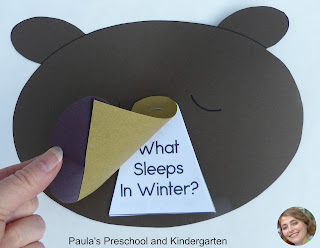
With all these sleeping bear stories, I was inspired to make a cute sleepy bear craft too.  (There's a mini book about animals that sleep in winter, hidden under his nose!)
https://www.teacherspayteachers.com/Product/Sleepy-Bear-book-craft-50-off-for-the-first-24-hours-2276061

https://www.teacherspayteachers.com/Product/Sleepy-Bear-book-craft-50-off-for-the-first-24-hours-2276061


Next time I'm going to show you some of my favorite polar bear books!  I'd love to hear about the stories your students love to hear too - please let me know in the comments!


***I do not use affiliate links, and am not reimbursed in any way for providing links.  I've chosen to link these products in order to make it easier for you to find them, if you wish.  There are many, many retailers that will be happy to help you locate these books, the links are merely suggestions.***

Tuesday, December 29, 2015

Cutting shapes for crafts - making it simple

If you work with small children, you probably spend a good amount of time working on crafts with them.  Somehow, all those craft projects seem to need an abundance of cutting!  Sure, the children can do a lot of it, especially if there's a printable pattern they can work from, but what about the other times?  Dark colored paper, and especially black paper, are hard to work with!  What to do?
Two simple and easy ways to cut out multiple shapes for craft projects!

Here are two tricks that work for me.  I hope they help you and your small ones keep sane and keep crafting!


The first trick is tracing the shapes onto black paper, using a regular pencil.  If you work in good light, the pencil lines show up beautifully - so you can hand those scissors and paper to the children and let them work on their fine motor skills as they do the cutting.  Isn't that a big part of why we do crafts in the first place?
Two simple and easy ways to cut out multiple shapes for craft projects!

Another trick that works well, and requires even less work from you, is using a printed paper to guide the children's cutting.  I think we've all tried holding a stack of papers and cutting them all at once, and unless you have an incredible grip, the papers all end up turning just a little bit... and the shapes end up skewed.  Here's the solution: staples.

Yes, simply staple the pattern on top of the papers you need to cut out.  The trick is to make sure you staple around the outside of the pattern you want, preferably in several places.  Here I stapled the corners of my white pattern on top of black construction paper, so I could make a black penguin shape for this Penguin rookery craft.  Sure, we could have colored it black, but that wasn't the look I wanted on this project, and practicing scissor skills is so important.
Two simple and easy ways to cut out multiple shapes for craft projects!
Now it's easy to cut both pieces of paper, and they aren't going anywhere.
Two simple and easy ways to cut out multiple shapes for craft projects!
Make sure you end close to a stapled area, to keep your papers together until the last possible moment.
Two simple and easy ways to cut out multiple shapes for craft projects!
Ta-da!
Two simple and easy ways to cut out multiple shapes for craft projects!
Not only do you have the desired piece cut from construction paper, but there's also a lovely white pattern piece.  I'm seeing another art project here, with positive and negative images.... but that's for another day!

Do you have any teacher tricks or life-hacks you'd like to share?  I'd love to hear them!

Tuesday, December 22, 2015

How I store my teaching resources

Someone recently asked me how I store all the teaching resources I've been creating on TeachersPayTeachers.  What a great question!  I'm sure there are a lot of "right" answers, but here's what I've been doing:

https://www.teacherspayteachers.com/Product/P-is-for-Penguin-50-off-for-the-first-24-hours-2268530
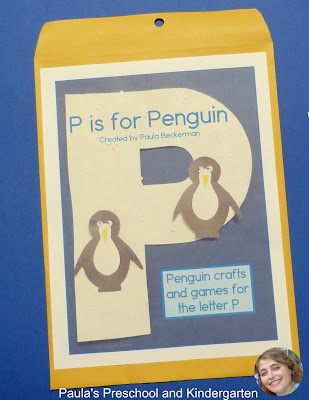
 I print out the resource, and glue the cover page onto a standard 9" x 12" envelope.  I glue the instruction page to the back of the envelope so it's super easy to find.
https://www.teacherspayteachers.com/Product/P-is-for-Penguin-50-off-for-the-first-24-hours-2268530
You can put the whole envelope through the laminator if you want to, but I have some that were made 17 years ago and not laminated, and they have survived, albeit imperfectly.  :-)

I like to use small zippered baggies to store small pieces, as rubber bands become brittle over time and sometimes end up breaking.  All the worksheets, pages, and even laminated games can slip right into the envelope!  Extra copies that didn't get used? Put them in and they'll be ready for next year!  Examples? In they go!  Small craft supplies you need for the project?  You guessed it, they slide right on in.

I like using envelopes like this because they take up so little space.  You can slip them onto a bookshelf alongside the books you teach at the same time, tuck them into the pockets of your binders, pop them in your filing cabinet - however you organize and store your materials!

Do you have a storage suggestion or solution you'd like to share?  I'd love to hear what you do - please leave me a comment!

Sunday, December 6, 2015

Holiday sensory bins

I've shared pictures of my kiddos enjoying sensory bins before - 53 times it seems!  It's something that I obviously love, to have written about it and provided these experiences so many times.  This week I had the pleasure of watching kiddos explore holiday sensory bins at our local library story time.  They were fascinated!  Here are four awesome sensory experiences - maybe your children would enjoy them too!
Holiday sensory bin ideas from Paula's Preschool and Kindergarten

Tinsel, magnet wands, and jingle bells.  So simple, and yet...
Holiday sensory bin ideas from Paula's Preschool and Kindergarten

Holiday sensory bin ideas from Paula's Preschool and Kindergarten

"Magic Snow"  comes as a powder, but when you add water it swells up and feels like cool wet snow.  Here's one link to it - I don't use affiliate links, I'm just sharing this to help you find it if your child would enjoy it!  My older son had some many years ago, and LOVED it.  The library hid finger puppets in it for the children to find, but I saw just as many children scooping up hand fulls and arm fulls.
Holiday sensory bin ideas from Paula's Preschool and Kindergarten

Pine cones and wood shavings.  These have the added benefit of smelling lovely!  These are two very different textures, contrasting nicely.  There were also magnifying glasses in here, which the children used as scoops.
Holiday sensory bin ideas from Paula's Preschool and Kindergarten

The final bin was of fake decorative snow, little bits of shiny plastic, intended as a holiday decoration.  I watched one child in particular pick up hand fulls, then  stand up and slowly release it back into the bin, so it really looked like a blizzard coming from her hands.  The fine motor workout as she rubbed her fingers to drop the pieces was impressive, but to her it was obviously just pure joyful play.
Holiday sensory bin ideas from Paula's Preschool and Kindergarten

Yes, it got messy - we had 78 children attend story time this week!  Before putting out the sensory bins we laid down large table cloths, and that did help with clean up.  If the mess worries you, there are many other mediums for sensory bins that clean up quickly: pompoms, nuts in the shell, acorns, popsicle sticks, etc.  You can also take sensory play outside, so there's not a mess in the house.  Two of my favorite outside sensory bin fillers are bird seed and seed corn - any that is dropped becomes bird and squirrel food, and we often have the opportunity to observe them up close as they clean up our messes!

Now, inspired by these fun bins put together by the library staff for our lucky kiddos, I'm thinking about what sensory bins we could make for other holidays.  Dreidels and candles, blue and silver tinsel strips for Hanukkah?  Dried corn or beans with red, green and black candles, a unity cup, and small gift boxes for Kwanzaa?  The possibilities are endless!

Tuesday, December 1, 2015

Five Little Penguins, a counting story

Do you love penguins?  These clip art penguins from Sonya Dehart Design were so darned cute, I had to make something fun with them!

Here's what I put together:

https://www.teacherspayteachers.com/Product/Five-Little-Penguins-a-counting-story-50-off-for-the-first-24-hours-2239783


Five little penguins went out to play
On a snowy winter day.
The ice was cold and the clouds were gray,
So one little penguin waddled away.

Four little penguins...
Three little penguins...
Two little penguins...
One little penguin...

No little penguins went out to play
On a snowy winter day.
The sun came out and the clouds blew away,
So five little penguins came back to play!

I made a read aloud book of the poem, with numerals and number words on each page, so young kiddos learning their numbers will really benefit from the book.  The count down poem format really lends itself to flannel board or chalk board display, so there are five little penguin manipulatives to act it out.  Way back when I taught first grade, I used a count down poem and manipulatives like these to introduce subtraction: I displayed the pictures, and wrote the subtraction sentences next to them as we reread the rhyme.  This method really helped children see that counting down is the same thing as subtracting 1.

My favorite part of this set though is the finger puppets I made to act it out as a finger play!
I can't wait to use these with the kiddos!

Wednesday, November 18, 2015

Rest time routines

If you are a parent, you probably have some kind of bedtime routine with your child.  I hope it involves snuggling up to read some favorite stories, and I bet it includes a bath, teeth brushing, and  a goodnight kiss.  We create these routines with our children both for their sake and for ours: children do best with routines.

It makes sense if you think about it.  There are so many things children don't know: What will be for dinner?  Where are we going? Why? Who? What?  A routine lets them know what is coming next, and gives some structure to their days.  It lets them prepare themselves for what is next.

Teaching 3-5 year olds, we needed a rest/nap time each afternoon.  What started out as a pretty simple routine - use the restroom, read some books, then lay down on our nap mats - later became a much more satisfying routine that worked beautifully.

See?

About 10 years ago I read an article in Exchange magazine about "pillow talk".  I'd always had some quiet one-one time with my boys at bedtime, and we had some of our best conversations in the quiet of a darkened room at the end of the day.  To help them find peaceful sleep, we had "happy thoughts" each night.  Each boy would tell me 3 good things about their day.  This sounded a whole lot like "pillow talk".

A few years later, I was trying to figure out ways to calm a child who took forever to close eyes and sleep (and then couldn't be woken for hours!), and saw an article about the soothing scent of lavender.  If you've deal with a child like this, you know you'll try just about anything!  I bought a bottle of lavender scented lotion, and started offering that to everyone at rest time too.

Anyway, here's the routine that evolved. 

First: everyone used the rest room, and picked one book to read.  Yes, everyone.  With 12 students in the class we had to limit the books to fairly short ones, and occasionally we had to do fewer, but most days we had 12 stories!  I'd read the more exciting ones first, and save the calmer, slower, or musical books for last.  It's really nice to end with a song!

Next: everyone went to their mats.  I closed the blinds both to make it a little darker, and to eliminate all the exciting things to be seen outside.

Then: I turned on quiet, calm music, grabbed that lavender lotion, and went from child to child, offering hand lotion and asking for happy thoughts.  Almost everyone had something nice to tell me each day, and it often started, "Mommy and daddy and brother and...."  As they talked they'd rub the lotion into their hands, and we'd have a few special moments, just the two of us in a room full of friends.  Having an adult's undivided attention, even for 30 seconds, is a powerful and often coveted thing in a preschool classroom!  I'd end our minute together by offering a kiss on the forehead.

When everyone had been tucked in, the room was dark and smelled of lavender, and sweet music played, I'd sit on the couch with a book until they fell asleep.  Yes, some children would invent reasons to wiggle, talk, or need the bathroom again (twice!).  No, it didn't always go as planned.  But almost every day we managed to get 12 children to sleep for at least part of the rest time. 

Maybe some elements of our routine  will help you to calm your kiddos and find some peaceful moments in your day.  I hope so!

Wednesday, November 11, 2015

How to make a pumpkin pie (and teach math, language arts and life skills)

How to make a pumpkin pie (and teach math, language arts and life skills)

You probably already know I love to cook with children.  Yes, it can be messy.  Yes, it's a challenge to manage everyone when your hands are in batter, or eggs, or... well, nothing at all.  Still, it's a fantastic experience for the kiddos, and can cover a LOT of academics while seeming to be only a prelude to eating.  Cooking is fun!

Cooking, by it's very nature, involves reading (the recipe),
measuring (ingredients),
counting (eggs, spoons of spice),
personal hygiene (hand washing, averting your sneezes),
environmentalism (recycle those empty cans, compost the peelings) 
and self help skills (clean up your messes).
Don't forget cool things like learning to use the can opener,
or watching how a bread machine works.

To take that learning just a little further, we often wrote class experience stories, such as our annual "How To Make a Pumpkin Pie" book.  As we enjoyed our cooking experiences, I would take pictures, and when all was said and done, we'd sit down together as a class and brainstorm all the things we had done.  Everyone would tell me the things they remembered, and I'd write them on a chart, then we'd put them in order from first to last.  I would type up the sequence of events the children had generated, and print photos of each activity along with the words.  Slipping everything into page protectors and then a bradded folder made for a quick and sturdy book.   I always put those books in our classroom library, because it's fun to go back and revisit the experience, and it's fun to look at pictures of you and your friends doing fun things - so the kiddos were motivated to read these class books over and over again.

Another perk to making our class experience books was looking back on previous years, seeing our big brothers and sisters doing the same activities when they were little, or seeing friends who had graduated to "big kid school".

In case you've never made a pumpkin pie before, here's how it's done:

Wash your hands.
How to make a pumpkin pie (and teach math, language arts and life skills)
 Crack two eggs into a bowl.
How to make a pumpkin pie (and teach math, language arts and life skills)
Add 3/4 cup sugar, 
How to make a pumpkin pie (and teach math, language arts and life skills) 
1 teaspoon cinnamon, 
How to make a pumpkin pie (and teach math, language arts and life skills)
1/2 teaspoon salt, 1/2 teaspoon ginger and 1/4 teaspoon cloves.
How to make a pumpkin pie (and teach math, language arts and life skills)
Stir it all up!
How to make a pumpkin pie (and teach math, language arts and life skills)
Add a can of evaporated milk,
How to make a pumpkin pie (and teach math, language arts and life skills)

How to make a pumpkin pie (and teach math, language arts and life skills)

How to make a pumpkin pie (and teach math, language arts and life skills)
...and stir up some more.
How to make a pumpkin pie (and teach math, language arts and life skills)
Add one can of pumpkin, or the equivalent of home made cooked pumpkin if you are an overachiever.
How to make a pumpkin pie (and teach math, language arts and life skills)
While one friend is stirring, other friends hold the bowl steady. We all get turns stirring!
How to make a pumpkin pie (and teach math, language arts and life skills)
When it is really well mixed, pour it into 2 uncooked pie crusts.  The canned pumpkin recipe says to use one deepdish pie crust, but we've always found there to be too much mix to fit.  While the filling is delicious baked in a pyrex bowl without any crust, I liked to use 2 pie shells, so each child had a pie of their own.
How to make a pumpkin pie (and teach math, language arts and life skills)
Bake at 425* for 15 minutes, then reduce temperature to 350* for 40-50 minutes.  Cool on a wire rack, then serve or refrigerate.
How to make a pumpkin pie (and teach math, language arts and life skills)
Each year at Thanksgiving, each child made their own pumpkin pie to take home to their family Thanksgiving feast.  Can you imagine the pride these children felt when their families served food they had made?

Yes, it can be messy.  Yes, it's a challenge to manage everyone when your hands are in batter, or eggs, or... well, nothing at all.

Wishing you a Thanksgiving full of pie, children and laughter!