Welcome to Paula's Primary Classroom! This blog is where I share ideas for teaching and learning with families, friends and other early childhood educators. Please don't use the photos or text of this blog without permission, but please do use any ideas you find useful. Thank you for stopping by!
Showing posts with label class books. Show all posts

Thursday, July 11, 2019

The Best Back-to-School Blog Posts


From classroom organization to first day of school activities, this collection of blog posts will set you up for back-to-school success. There's something for everyone PreK - middle school. So without further ado, here are a few of my favorite teacher blog posts (labeled by grade) to help set you up for success in the coming school year!


Prek - 3rd Grade


Read all about creating a life long love for reading within each of our students in My Favorite Way to Increase Reading Engagement by Paula Beckerman from Paula's Primary Classroom. She says, "After 25 years of teaching early childhood, I haven't found any magic tricks that always work for everyone, each child is unique after all!  There is, however, something that has served me incredibly well, year after year." Find out what it is HERE!


 K - 6th Grade


Start the School Year Off Right! will help you get ready for the busy season.  Melissa Bonito from Peas in a Pod offers some smart tips and tricks to help set the stage for a smooth school year. You won't want to miss her top 5 back to school tips, and how she goes about teaching classroom procedures!


2nd - 5th Grade


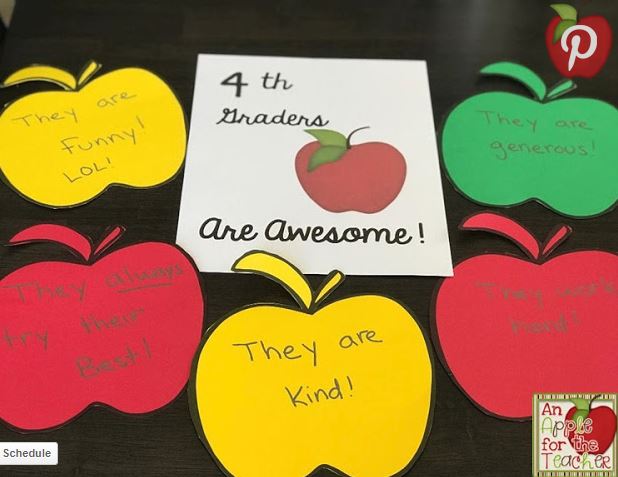
Kelly Malloy from An Apple for the Teacher is full of classroom design inspiration! She offers multiple pictures of her classroom throughout the years. Her latest post, My Students Are Amazing, offers a peek at her classroom door display for September. Hint**There's a freebie in this post!


K - Middle School


In Organize & Transform Your Classroom, Suzy Memeo from StudentSavvy offers tips on creating a space that makes you happy! She will guide you as you come up with your plan, locate the problem areas in your classroom, and tackle them. Her beautiful designs are a must see!


1st - 8th Grade


"How do you see your role in the classroom in terms of the first month of school?"  That was a pivotal question on my job interview many years ago. Sometimes the more things change, the more the stay the same. Whether it was asked during your interview or not, the answer can make or break your classroom management plan. If you don't accomplish anything else during the first weeks of school but to have control of your class, then you have done a good job! It was my answer and the  school superintendent interviewing me agreed! Read more about how Kathleen Guleksen, from A Plus Kids, does just that!


Thanks for checking out the list of our favorite back-to-school posts. I'd love to hear your tips for a smooth year in the comments below!


Tuesday, April 16, 2019

15 of the best farm books and activities I've found

15 of the best farm books and activities I've found - from Paula's Primary Classroom
There are a lot of awesome children's books about the farm and farm animals, and there's no way I can talk about ALL of them - but here are some of my favorites, both old and new.

 This post contains affiliate links. I earn a small commission each time someone makes a purchase using one of my links, which helps to support the blog.  All opinions are my own and I only promote brands and products that I have used myself and truly love. 

Little Blue Truck by Alice Schertle 
If you have preschoolers and have not yet met this book, you absolutely must find it!  The copy at our library is frequently checked out, because it includes farm animals and trucks - 2 all time favorites with the preschool crowd.

Farmer Duck by Martin Waddell
I love Farmer Duck for lots of reasons, not the least being the thankless nature of his tasks (no-one working with small children ever does thankless tasks, do we?).  I think the best part is that Duck answers with a single word every time he's called, "Quack!"  The kiddos love to join in and help me read/perform this one, and I love that!

Rooster's Off to See the World by Eric Carle
This is an oldie but a good one, any children's book collection should probably include something from Eric Carle's amazing list of titles!

Barnyard Banter by Denise Fleming
Another artist whose work is always amazing, Denise Fleming does a lovely job of combining simple rhyming text, animal noises, and an easily found but sort of hidden goose on each page.  Little ones love finding the goose and of course, making the noises.

Big Fat Hen by Keith Baker
Perhaps this is actually a tour of some of my favorite children's book artists, because Keith Baker is another  whose art is amazing!  In each of his books there is something hidden on each page, in this case the word HEN is on each hen in the book.  If you have a child who loves combing the pages looking for hidden treasure, you'll fall in love with all of Baker's work.

Color Farm, by Lois Ehlert
Bold colors, cut outs in the pages, clever use of shapes - fantastic!  This would pair beautifully with the tangram activities I suggest further down this list!

Interrupting Chicken by David Ezra Stein
I first heard about this book from a child who had heard it elsewhere, and couldn't stop talking about it, for weeks.  Anything that engages a child that long is well worth checking out, and I was not disappointed!  Bonus feature, if you have students who blurt, or need to work on self control, this book is a gentle way to bring that to their attention in a fun way.

Pete the Cat Old MacDonald Had a Farm, illustrated by James Dean
You can't help but sing along with this song, and adding Pete the Cat makes just about everything better, right?  Do we cry? Goodness no!

Old MacDonald Had a Woodshop by Lisa Shulman
Old MacDonald is a woman in this book, and she has a fantastic set of wood working tools that make awesome sounds.  This one will easily be a class favorite for the great combination of the familiar tune and new sounds and motions you can make with it.

Wonky Donkey by Craig Smith.  Click here to watch a performance of the song that the book is based on - I don't know about you, but I think I need the printed words to make it all the way through!

Hedgie's Surprise by Jan Brett
Okay, this is definitely a tour of farm books by awesome picture book artists!  Like most of Jan Brett's books, this one is a slightly longer picture book read, and the illustrations are phenomenal!  I like to point out the action in the frames around the main picture - Jan Brett always includes extra information in these smaller illustrations - it's a great way to engage students further with the book, makes reading the pictures easier for the youngest kiddos, and shows that we get information in picture books from both the pictures and the words.  Working on narrative skills? Students can use these extra pictures to tell more of the story than the text alone provides.

Of course, no matter how many amazing books we read to our students, we also need great follow up activities!

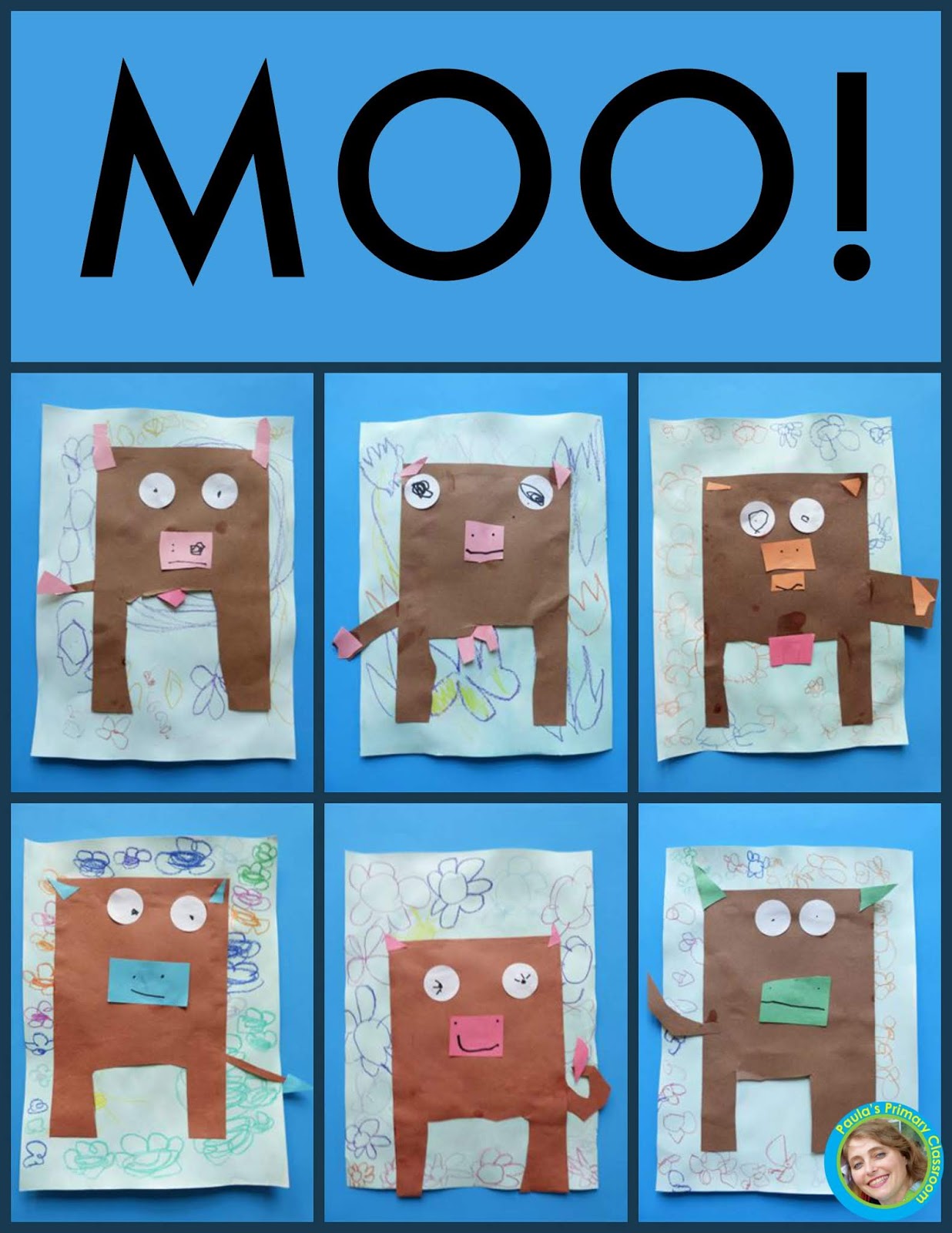
I adore these mixed media cows - an idea inspired by this post (in French). I explain how we made them on our class' Artsonia page. This project lends itself to a discussion of squares, circles and rectangles, worked fine motor skills as we worked with scissors, crayons, watercolor paint and crayons and frankly looked awesome as a bulletin board!
15 of the best farm books and activities I've found - from Paula's Primary Classroom

We combined math, art and literacy for this next project:
I'm really happy that I recorded each child reading their page, and made a read aloud of our class book.  What a neat treasure to look (and listen) back on! If you haven't recorded your students reading yet, having them read their page of a class book is a simple first step - and with only a few words (which they wrote!) for each child to read, it feels more like an opportunity to show what they can do than a challenging task to complete.  Isn't that how we want our students to feel about reading?
15 of the best farm books and activities I've found - from Paula's Primary Classroom

A couple more ways I like to include math learning is with farm tangrams (see how I use them in this youtube video!)...
farm tangrams for 2D math learning

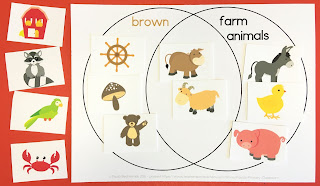
... and hands on math games.
https://www.teacherspayteachers.com/Product/Farm-Math-with-Sorting-Graphing-and-Venn-Diagram-1826868

https://www.teacherspayteachers.com/Product/Farm-Math-with-Sorting-Graphing-and-Venn-Diagram-1826868

https://www.teacherspayteachers.com/Product/Farm-Math-with-Sorting-Graphing-and-Venn-Diagram-1826868

If your students are beginning to read, you'll want some sight word rich text for them - maybe like this one that's available in my TeachersPayTeachers store:
https://www.teacherspayteachers.com/Product/Farm-Sentence-Picture-Match-Reading-Center-1666758

Do you still need more ideas about the farm?  Check out my farm Pinterest board!  Thanks for stopping by!
https://www.pinterest.com/paulasprimaryclassroom/farm-theme/

Sunday, July 16, 2017

How to Increase Reading Engagement Every Day This Year


How to increase reading engagement every day this year (with class books!)
I think reading engagement is every teacher's hope; we all want our students to love reading as much as we do.  We want to see our kiddos engaged in reading, choosing to pick up books, talking about what they're reading, eagerly sharing their favorites with each other.  I have vivid memories of seeing my own young children lose themselves in books, laying on a bed or a couch, oblivious to the world around them, immersed in a world that only exists in words... and I cherish those memories.  We know that children who love to read, and choose to read, are going to read, and in turn they'll become even better readers.  Students like this are easy to teach, because they're eager to learn, and know that they CAN learn.  If only there was a way to develop this love of reading in all our children!
How to increase reading engagement every day this year (with class books!)
After 25 years of teaching early childhood, I haven't found any magic tricks that always work for everyone, each child is unique after all!  There is, however, something that has served me incredibly well, year after year, with hundreds of children: class books.
How to increase reading engagement every day this year (with class books!)
It makes a lot of sense when you think about it: our kiddos are interested in themselves, and in each other.  They want to share their ideas, they want to smile, laugh, or reminisce together, they want to see their own words and pictures being read by their friends, and they want to see their friends' words and pictures.  Class books meet all those criteria, and as an added bonus, they engage students in writing and drawing, as well as reading.  It's no wonder I love class books!
How to increase reading engagement every day this year (with class books!)
There are many ways to create, publish, bind, and share student writing, and over the years I've tried a lot of them!  When I taught first grade, I bought an inexpensive scrapbook with an impressive looking cover, and glued student work into it.  The result was a satisfyingly solid "real" book - and as we only published finished pieces in it, students really worked to make their writing book worthy!
How to increase reading engagement every day this year (with class books!)
I also made class books about experiences we shared, such as a trip to the fire station or a pizza parlor.  I took photos of each student during our experiences, and upon returning to our classroom gave each student a page with room for a photo and room to write about our experience.  I'd develop the pictures, and then let my kiddos stick a real photo of themselves onto their page.  Sometimes we'd bind all the pages together and make a class experience book, other times each child would add their page to their own "photo album".  Can you imagine how much they loved to revisit these books?
How to increase reading engagement every day this year (with class books!)
Of course, photos aren't the only way to illustrate a class book.  Oftentimes I'd have my students illustrate their page.
How to increase reading engagement every day this year (with class books!)
Sometimes we wrote about an experience as a class, with each student contributing something about the experience, while I wrote on chart paper.  Next we would decide on what order the events of our narrative belonged in, and arrange their individual sentences into a retelling of what we had done.  I liked to type up the story, print it out on multiple pages, and have students work in teams to illustrate the pages.
How to increase reading engagement every day this year (with class books!)
You've probably noticed that all of these methods took some effort on my part: taking and developing photos, or taking dictation and then typing up students' words.  Yes, there is definitely a lot of teacher effort in these particular methods, and no, you probably can't manage this every day. Sometimes you need something quick and easy, right?
How to increase reading engagement every day this year (with class books!)
There's another method of making class books that is super easy: printed pages with a prompt, and room for student responses.  I've found this kind of book is one of the best for my youngest students - preschool and kindergarten kiddos whose writing is much shorter, and more difficult to read (unless you're a kindergarten teacher, and can read phonetically spelled words that are out of order, with reversed letters, missing vowels and written in a shaky hand.  Kudos to you then)! 

This kind of book usually has a simple, repetitive text, with room for students to add just one or two words.  It's easier for young kiddos to write, and the repeated text makes it easier for them to read too.  Since the work in these books is their own, and their names, and names of friends are on every page, my kiddos have always LOVED this kind of book.  They read them to themselves.   They read them with their friends.  They read them to their parents at pick up time.  Sometimes I even let them check these books out to take home overnight. Win-win-win!
How to increase reading engagement every day this year (with class books!)
If you think you'd like to incorporate class books into your reading and writing time, you can find inspiration many places!  Try pinterest - here's my board about class books to get you started:


I've put together many of my class book ideas into a print and go format.  If you like the idea of class books and want a no-muss no-fuss ready to go resource that also covers every single preprimer word, I hope you'll check out:

https://www.teacherspayteachers.com/Product/Class-Books-for-Every-Letter-of-the-Alphabet-Using-Every-PP-Sight-Word-1298475
Thank you so much for reading this long post - I hope you're inspired to incorporate more class books in your classroom, and I'd love to hear about how they work out for you!

Wednesday, November 11, 2015

How to make a pumpkin pie (and teach math, language arts and life skills)

How to make a pumpkin pie (and teach math, language arts and life skills)

You probably already know I love to cook with children.  Yes, it can be messy.  Yes, it's a challenge to manage everyone when your hands are in batter, or eggs, or... well, nothing at all.  Still, it's a fantastic experience for the kiddos, and can cover a LOT of academics while seeming to be only a prelude to eating.  Cooking is fun!

Cooking, by it's very nature, involves reading (the recipe),
measuring (ingredients),
counting (eggs, spoons of spice),
personal hygiene (hand washing, averting your sneezes),
environmentalism (recycle those empty cans, compost the peelings) 
and self help skills (clean up your messes).
Don't forget cool things like learning to use the can opener,
or watching how a bread machine works.

To take that learning just a little further, we often wrote class experience stories, such as our annual "How To Make a Pumpkin Pie" book.  As we enjoyed our cooking experiences, I would take pictures, and when all was said and done, we'd sit down together as a class and brainstorm all the things we had done.  Everyone would tell me the things they remembered, and I'd write them on a chart, then we'd put them in order from first to last.  I would type up the sequence of events the children had generated, and print photos of each activity along with the words.  Slipping everything into page protectors and then a bradded folder made for a quick and sturdy book.   I always put those books in our classroom library, because it's fun to go back and revisit the experience, and it's fun to look at pictures of you and your friends doing fun things - so the kiddos were motivated to read these class books over and over again.

Another perk to making our class experience books was looking back on previous years, seeing our big brothers and sisters doing the same activities when they were little, or seeing friends who had graduated to "big kid school".

In case you've never made a pumpkin pie before, here's how it's done:

Wash your hands.
How to make a pumpkin pie (and teach math, language arts and life skills)
 Crack two eggs into a bowl.
How to make a pumpkin pie (and teach math, language arts and life skills)
Add 3/4 cup sugar, 
How to make a pumpkin pie (and teach math, language arts and life skills) 
1 teaspoon cinnamon, 
How to make a pumpkin pie (and teach math, language arts and life skills)
1/2 teaspoon salt, 1/2 teaspoon ginger and 1/4 teaspoon cloves.
How to make a pumpkin pie (and teach math, language arts and life skills)
Stir it all up!
How to make a pumpkin pie (and teach math, language arts and life skills)
Add a can of evaporated milk,
How to make a pumpkin pie (and teach math, language arts and life skills)

How to make a pumpkin pie (and teach math, language arts and life skills)

How to make a pumpkin pie (and teach math, language arts and life skills)
...and stir up some more.
How to make a pumpkin pie (and teach math, language arts and life skills)
Add one can of pumpkin, or the equivalent of home made cooked pumpkin if you are an overachiever.
How to make a pumpkin pie (and teach math, language arts and life skills)
While one friend is stirring, other friends hold the bowl steady. We all get turns stirring!
How to make a pumpkin pie (and teach math, language arts and life skills)
When it is really well mixed, pour it into 2 uncooked pie crusts.  The canned pumpkin recipe says to use one deepdish pie crust, but we've always found there to be too much mix to fit.  While the filling is delicious baked in a pyrex bowl without any crust, I liked to use 2 pie shells, so each child had a pie of their own.
How to make a pumpkin pie (and teach math, language arts and life skills)
Bake at 425* for 15 minutes, then reduce temperature to 350* for 40-50 minutes.  Cool on a wire rack, then serve or refrigerate.
How to make a pumpkin pie (and teach math, language arts and life skills)
Each year at Thanksgiving, each child made their own pumpkin pie to take home to their family Thanksgiving feast.  Can you imagine the pride these children felt when their families served food they had made?

Yes, it can be messy.  Yes, it's a challenge to manage everyone when your hands are in batter, or eggs, or... well, nothing at all.

Wishing you a Thanksgiving full of pie, children and laughter!


Thursday, October 1, 2015

Trick or Treat, Smell my Feet!


Trick or Treat, Smell my Feet!  Halloween writing activity from Paula's Preschool and Kindergarten
I often talk about hands-on activities... this week we're going for a feet-on project instead!  Going through some old photos, I found this cute art and writing activity, which is super fun for a classbook or a bulletin board.
 Trick or Treat, Smell my Feet!  Halloween writing activity from Paula's Preschool and Kindergarten


Trick or Treat, Smell my Feet!  Halloween writing activity from Paula's Preschool and Kindergarten

Trick or Treat, Smell my Feet!  Halloween writing activity from Paula's Preschool and Kindergarten
We used Halloween colored paper and helped each child make a white ghosty footprint on it.  While the footprint dried, each child simply wrote one thing they'd like to eat.
 Trick or Treat, Smell my Feet!  Halloween writing activity from Paula's Preschool and Kindergarten


When everything was dry, the kiddos added ghostly details and glued it all together.
 Trick or Treat, Smell my Feet!  Halloween writing activity from Paula's Preschool and Kindergarten
Happy Halloween!