Welcome to Paula's Primary Classroom! This blog is where I share ideas for teaching and learning with families, friends and other early childhood educators. Please don't use the photos or text of this blog without permission, but please do use any ideas you find useful. Thank you for stopping by!
Showing posts with label math games. Show all posts

Friday, March 13, 2020

What you need to know to make it through school closures

With school closings happening to prevent the spread of  COVID 19, many parents are scrambling to figure out how to teach their children from home.  Sound familiar?  Feeling panicked?  Take a deep breath and read on.
What you need to know to make it through school closures

First, YOU CAN DO THIS!  You taught your child to eat, walk, talk, and use the bathroom, and you were probably sleep deprived when you did all that.  While juggling how to teach your children along with all the other things in your life might not be ideal, this isn't permanent, and you can do it.

Next, remember that you don't have to introduce new material, figure out which Common Core State Standards (or other set of standards) to cover, or document it all.  You and your child just need to stay afloat academically, and there are many simple things you can do to make that happen.

What you need to know to make it through school closures

1. READ
Reading is the most important thing to keep practicing, and it should be fun.  Unless your child's teacher has sent home a list of requirements, this is the time to let your child read for pleasure.  If that means reading their favorite book for the umpteenth time, so be it!  Bored with the books or magazines you have at home?

- This article suggests 7 websites with free online books for kids
- If you hop over to YouTube.com you'll find many books read aloud
- A quick search of TeachersPayTeachers found more than 20,000 FREE printable books including this one for young children from me. 
- I have 27 free resources for preschool - 3rd grade in my TeachersPayTeachers store - and you don't have to be a teacher to use the site!
-Try reading and preparing recipes.  There's nothing quite as motivating as food, and as you and your child cook together they'll also practice counting, measuring, and time (math skills), and experience changes in matter (science).  Bonus points if they want to start cooking regularly!

What you need to know to make it through school closures

2. WRITE
Think of all the times in a day when you pick up a pen and jot something down - writing with your child can be as simple as making a grocery list or brain storming activities they'd like to do.  As adults we write for many different purposes - making a list, texting or emailing, writing a story, making a photo album, recording a recipe, journaling our thoughts... they are all valid forms of writing and will keep your children learning and thinking.  Here are some things to consider:

 - Younger children might not write the same way you do - they're learning to listen to the sounds in words and to translate those sounds into letters - and that's okay for now. 
- Writing can be on a device.  Letting your child type an email or text message as you dictate it can be very motivating for some children, as is emailing a grandparent or other family member.
- Everything is more fun when they do it with you.  A reluctant writer might not get anything down on paper if left by themselves, but if you take turns adding a sentence to a story you make up together, it's infinitely more fun.
- Write down family stories together and let your child add illustrations. Bonus points if they want to read this over and over!
- Mix it up by letting them write with fancy pencils, markers, pens, etc, or pull out the magnetic letters, building blocks with letters on them, or cookie cutter letters or letter stamps if you have them. 
- Break out the scrabble and other word games and play - they're still making words and it's waaaaaay more fun than following a journal prompt!
- Print out this free observation journal, then head outside and find something to focus on and observe for a few minutes each day for a week.


What you need to know to make it through school closures

3. PRACTICE MATH FACTS
Depending on the age of your child, they may be working on addition, subtraction, multiplication, division or all of them.  Their teacher may have already given you suggestions for which facts they need to work on, or ways to practice at home.  Here are a few learning games you can do with a deck of cards or a pair of dice:

- Deal a deck of cards to you and your child(ren).  Agree on the skill you're working on (largest / smallest number, addition total, difference, multiplication).  Count to 3 and both flip a card over.  The first of you to say the correct answer takes both cards and adds them to the bottom of their pile.
- Play a memory game.  Make a set of cards with 2 of each number.  Shuffle, then deal them face down in a grid pattern.  Take turns flipping 2 cards over to see if they match.  If they do, the player who flipped them takes them and gets another try.  If they don't match, flip them back over and the other player gets a turn.
- Play the memory game above, but make a set of cards with pairs that add up to 10.  The goal is to flip 2 cards that total 10... or any other number you agree upon.
- Roll 2 dice and tell the sum or difference.
- Need to work on harder skills like adding or subtracting 3 digit numbers?  Remove the face cards from your deck of cards, and have your child lay 3 cards side by side (to represent a 3 digit number), then 3 more cards side by side below them.  Can they add them?  Subtract them? Multiply them?

Is this everything?  Goodness no - but I hope it gives you a place to start!   I'll be back again soon with more suggestions and resources.  If you haven't yet subscribed, go ahead and do it so you get notified when new posts go live.  Is there something specific you'd like to see?  Let me know in the comments!  We're all in this together, and we WILL get through this!

Tuesday, April 16, 2019

15 of the best farm books and activities I've found

15 of the best farm books and activities I've found - from Paula's Primary Classroom
There are a lot of awesome children's books about the farm and farm animals, and there's no way I can talk about ALL of them - but here are some of my favorites, both old and new.

 This post contains affiliate links. I earn a small commission each time someone makes a purchase using one of my links, which helps to support the blog.  All opinions are my own and I only promote brands and products that I have used myself and truly love. 

Little Blue Truck by Alice Schertle 
If you have preschoolers and have not yet met this book, you absolutely must find it!  The copy at our library is frequently checked out, because it includes farm animals and trucks - 2 all time favorites with the preschool crowd.

Farmer Duck by Martin Waddell
I love Farmer Duck for lots of reasons, not the least being the thankless nature of his tasks (no-one working with small children ever does thankless tasks, do we?).  I think the best part is that Duck answers with a single word every time he's called, "Quack!"  The kiddos love to join in and help me read/perform this one, and I love that!

Rooster's Off to See the World by Eric Carle
This is an oldie but a good one, any children's book collection should probably include something from Eric Carle's amazing list of titles!

Barnyard Banter by Denise Fleming
Another artist whose work is always amazing, Denise Fleming does a lovely job of combining simple rhyming text, animal noises, and an easily found but sort of hidden goose on each page.  Little ones love finding the goose and of course, making the noises.

Big Fat Hen by Keith Baker
Perhaps this is actually a tour of some of my favorite children's book artists, because Keith Baker is another  whose art is amazing!  In each of his books there is something hidden on each page, in this case the word HEN is on each hen in the book.  If you have a child who loves combing the pages looking for hidden treasure, you'll fall in love with all of Baker's work.

Color Farm, by Lois Ehlert
Bold colors, cut outs in the pages, clever use of shapes - fantastic!  This would pair beautifully with the tangram activities I suggest further down this list!

Interrupting Chicken by David Ezra Stein
I first heard about this book from a child who had heard it elsewhere, and couldn't stop talking about it, for weeks.  Anything that engages a child that long is well worth checking out, and I was not disappointed!  Bonus feature, if you have students who blurt, or need to work on self control, this book is a gentle way to bring that to their attention in a fun way.

Pete the Cat Old MacDonald Had a Farm, illustrated by James Dean
You can't help but sing along with this song, and adding Pete the Cat makes just about everything better, right?  Do we cry? Goodness no!

Old MacDonald Had a Woodshop by Lisa Shulman
Old MacDonald is a woman in this book, and she has a fantastic set of wood working tools that make awesome sounds.  This one will easily be a class favorite for the great combination of the familiar tune and new sounds and motions you can make with it.

Wonky Donkey by Craig Smith.  Click here to watch a performance of the song that the book is based on - I don't know about you, but I think I need the printed words to make it all the way through!

Hedgie's Surprise by Jan Brett
Okay, this is definitely a tour of farm books by awesome picture book artists!  Like most of Jan Brett's books, this one is a slightly longer picture book read, and the illustrations are phenomenal!  I like to point out the action in the frames around the main picture - Jan Brett always includes extra information in these smaller illustrations - it's a great way to engage students further with the book, makes reading the pictures easier for the youngest kiddos, and shows that we get information in picture books from both the pictures and the words.  Working on narrative skills? Students can use these extra pictures to tell more of the story than the text alone provides.

Of course, no matter how many amazing books we read to our students, we also need great follow up activities!

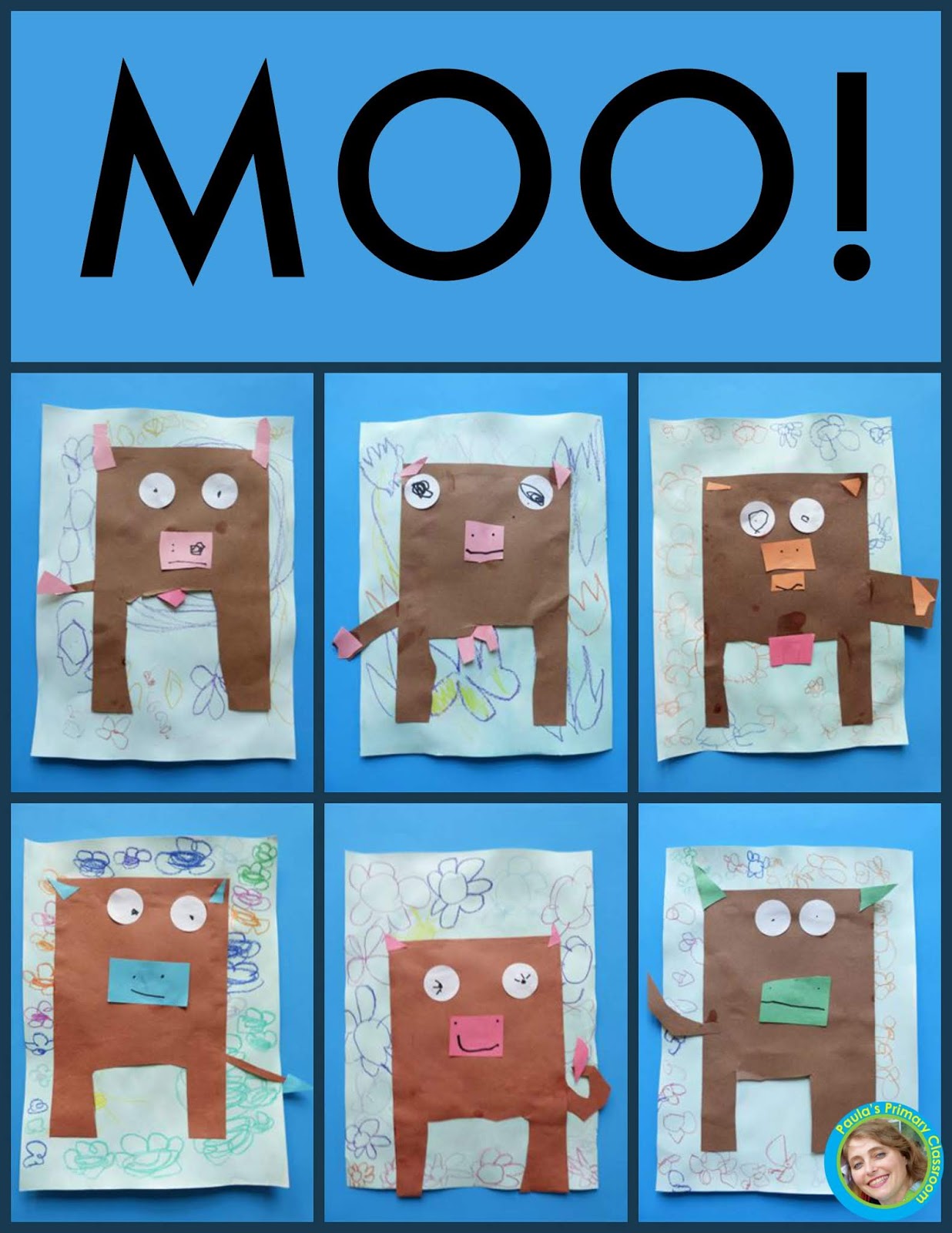
I adore these mixed media cows - an idea inspired by this post (in French). I explain how we made them on our class' Artsonia page. This project lends itself to a discussion of squares, circles and rectangles, worked fine motor skills as we worked with scissors, crayons, watercolor paint and crayons and frankly looked awesome as a bulletin board!
15 of the best farm books and activities I've found - from Paula's Primary Classroom

We combined math, art and literacy for this next project:
I'm really happy that I recorded each child reading their page, and made a read aloud of our class book.  What a neat treasure to look (and listen) back on! If you haven't recorded your students reading yet, having them read their page of a class book is a simple first step - and with only a few words (which they wrote!) for each child to read, it feels more like an opportunity to show what they can do than a challenging task to complete.  Isn't that how we want our students to feel about reading?
15 of the best farm books and activities I've found - from Paula's Primary Classroom

A couple more ways I like to include math learning is with farm tangrams (see how I use them in this youtube video!)...
farm tangrams for 2D math learning

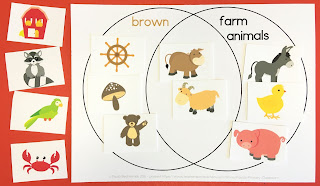
... and hands on math games.
https://www.teacherspayteachers.com/Product/Farm-Math-with-Sorting-Graphing-and-Venn-Diagram-1826868

https://www.teacherspayteachers.com/Product/Farm-Math-with-Sorting-Graphing-and-Venn-Diagram-1826868

https://www.teacherspayteachers.com/Product/Farm-Math-with-Sorting-Graphing-and-Venn-Diagram-1826868

If your students are beginning to read, you'll want some sight word rich text for them - maybe like this one that's available in my TeachersPayTeachers store:
https://www.teacherspayteachers.com/Product/Farm-Sentence-Picture-Match-Reading-Center-1666758

Do you still need more ideas about the farm?  Check out my farm Pinterest board!  Thanks for stopping by!
https://www.pinterest.com/paulasprimaryclassroom/farm-theme/

Sunday, January 27, 2019

Ferociously Good Fun with Tyrannosaurus Rex and Friends

Ferociously Good Fun with Tyrannosaurus Rex and Friends, by Paula's Primary Classroom
I'd like to think I'm an innovative teacher, constantly learning new things and sharing them with the children I get to see, but recently I realized something dreadful.  I had sunk into a dinosaur rut!

Perhaps you've been there too - I have so many favorite dinosaur books that I stopped paying attention to new ones.  Between Saturday Night at the Dinosaur Stomp, all the wonderful dinosaur books by Bernard Most, Bones, Bones, Bones, and Ten Terrible Dinosaurs, who had time for more?

Thank goodness I spent a little time recently rediscovering the dinosaur books available!  Now I have some new favorites to share, just in time for my dinosaur theme. 

Ferociously Good Fun with Tyrannosaurus Rex and Friends, by Paula's Primary Classroom
Dancing with the Dinosaurs by Jane Clarke - so cute!  Who would have expected all the dinosaurs to have moves like these?  The ending shouldn't have taken me by surprise, but it did - and when I read it to my kiddos they squealed with joy.  I won't spoil it for you - go read it!

Dinosaurs Love Underpants by Claire Freedman.  I know, I'm really behind, the underpants series has been around for a while.  I have no excuse.  I do wish dinosaurs and cavemen weren't depicted together, but the way the children enjoy this one more than makes up for it.

Dinosaur vs. the Library (and all kinds of other things) by Bob Shea.  If this doesn't get your junior paleontologists excited, I don't know what will.  Simple pictures, lots of roaring, and an adorable dinosaur that every 3 or 4 year old will imagine being.  Prepare yourself for lots of roaring!

Chalk by Bill Thomson. OH MY GOODNESS!  This is a phenomenal book, as is Fossil, also by Bill Thomson.  The illustrations show extreme perspectives in a super realistic way, and tell the whole story in this wordless book.  You'll want to use this with pre-readers, but even adults will enjoy this gem.  I recently paired it with The Book With No Pictures to teach reading skills to kindergarten and first grade students.

Ferociously Good Fun with Tyrannosaurus Rex and Friends, by Paula's Primary Classroom

I started by showing the children The Book With No Pictures, and enough of them had seen it before to know that it's a very funny book - of course they wanted me to read it to them!  Of course I obliged!  (Is there anything better than reading to kids?!)  One of the magical things about this book is the use of font size, color and type to show you how to read it.  Even children who aren't comfortable readers yet can analyze the way the text looks.  Big font = big voice.  Different colors?  Must mean different voices!  Text about a robot monkey is written in a very robot like font - so we read it with robot voices.  I love how expressive the children can be as we reread parts of the book with the font choices in mind!

Late in the book it uses the word "preposterous".  I like to reread that page, and then ask the children what they think that word means.  Have they ever heard it before?  No (at least so far no-one has), yet they all tell me more or less correctly what it means.  This opens up a discussion of context clues, and how good readers can figure out what words mean!

After reading The Book With No Pictures, we read a book with no words: Chalk.  This is important to me because at this age so many children realize the importance of print that they don't necessarily want to read the pictures - but it is such a useful part of decoding text for them!  As a reading teacher I've often told students to look at the pictures for clues, but I don't model doing that often enough, and I think many children begin to think of it as "how a baby reads", or not "real" reading.  By taking away all words, readers get to focus on the pictures and on how they tell a story, creating meaning and telling the narrative.  What great skills!

 It makes sense to follow up our reading lessons with some reading practice, so we work on dinosaur sight word mystery pictures.  Click on the picture and check out this pre-primer one.
https://www.youtube.com/watch?v=iuTqYSMyQW8

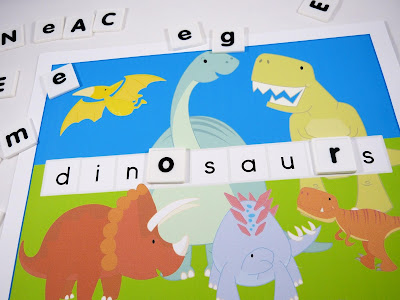
My preschool and early kindergarten students also enjoy working on dinosaur words with this word building activity.  With 14 pages of dinosaur words to build, this is a fun, hands on center for letter learners - I slip the pages into sheet protectors (easier than laminating!) and put out our 1" letter tiles.  Ta-da! Instant literacy station!
https://www.teacherspayteachers.com/Product/Dinosaur-Word-Building-Vocabulary-Posters-2914982


If you read my blog very often, you know I like to include a free resource in my posts - and here's a free counting, sequencing, and addition activity.  Click the picture to go to my TeachersPayTeachers store and download it - and if you like it, please take a moment to leave feedback so I know to keep offering freebies!
https://www.teacherspayteachers.com/Product/Dinosaur-Counting-and-Sequencing-1-20-2552564

There are a lot of other dinosaur learning activities in my TeachersPayTeachers store - I hope you'll stop by and check it out when you're prepping your dinosaur unit.  Until then, thanks for stopping by!

Paula

Tuesday, February 27, 2018

Insanely easy math fun that will make your children beg to learn!


 As I walked by the Target Dollar Spot this week, I spotted this little treasure!  200 mini erasers for $3 - and it's packaged in a divided container! 

This is a perfect math activity for our little ones to enjoy this spring.  Think of all the math they can learn as they play:  counting, sorting, graphing, patterning, 1-1 correspondence... there are so many possibilities.
I came up with a few more too - how could you use these for a Venn Diagram?  It's easy enough to make your own blank diagram - simply trace around a large bowl twice, overlapping the two circles as you do.  Can your child sort eggs/things with blue/eggs with blue?  How about bunnies/pink things/pink bunnies?

It would be easy to graph these too: have your child take a handful, and sort them.  Then line them up, and compare the rows of erasers.  What are there the most of?  The fewest?  How many more bunnies than carrots?

Have a slightly older child?  Can they add 3 bunnies and 6 eggs?  Two carrots with blue edges, and 4 carrots with yellow edges?  Can they use the erasers to answer a word problem: If I had 7 eggs, but gave 3 away, how many eggs would be left?

If your child has mastered addition and subtraction, try having them work on early multiplication skills by making a grid with the erasers.  How many is 3 rows of 5?  Can they show 12 erasers in rows and columns?  Can they do it another way?

I'm looking forward to sharing my new eraser collection with the kiddos!  How would you use it?!

Saturday, June 4, 2016

My favorite tricks for teaching children to count money

Are your children struggling to learn to count coins?  A lot of children do - but it doesn't have to be hard!  Today I'm going to share some of the tricks I've learned in over 20 years of teaching.
This post has lots of fun ideas and activities to help teach children how to count coins. Great for both parents and teachers!

(Side note: I have always used real coins with my students because fake coins just aren't the same.  Fake coins cost more than using real ones - so why on earth would I spend more to use something less useful?!  Worried they'll be stolen? In all my years teaching, I had one single dollar bill disappear from my first grade classroom one time.)  Use the real thing!

#1 Start simple, start early, repeat often

Counting mixed coins is a pretty complex task - children have to identify each coin, know it's value, start counting from the largest denomination, count by 25, 10, 5 and 1, and be able to count on while switching between those counting methods.  For most counting tasks our children will have encountered, we;ve expect them to count 1 item for each number, practicing 1-1 correspondence.  With mixed coins, they really need a whole new set of skills!  So what is a teacher (or parent) to do?

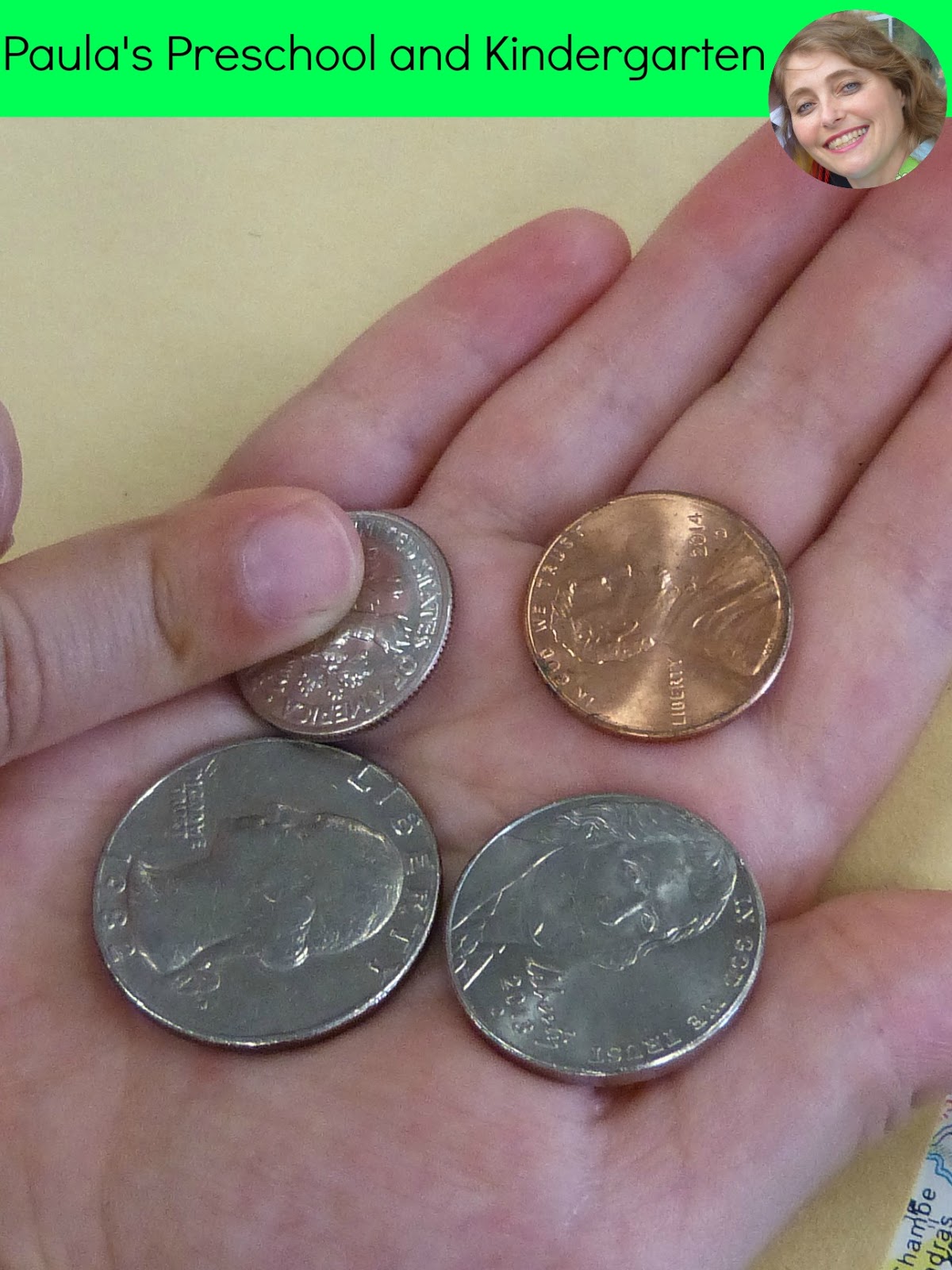
We break it down into baby steps, and we take it slowly.  We start by teaching our children to identify coins and their value.  When I still had my preschool (yes, I did say start early!) I had a stack of 3 oz plastic cups, each containing a penny, a nickel, a dime and a quarter.  Part of our daily routine was singing and dancing, and I often included a money song, such as Show Me The Money, by Jack Hartman and Money Money Money by Rhonda Crigger.  As each song began the children would spread the coins on one flat hand, so that they could point to each coin as it was named in the song.
This post has lots of fun ideas and activities to help teach children how to count coins. Great for both parents and teachers!
I could quickly monitor to see who needed help, and point to the correct coin for those children.  When the song finished, each child poured their coins back into the cup, ready for the next day. 

As simple as this sounds, the children LOVED it - they got to hold REAL money! Frequent repetition meant the children had lots of chances to master the skill, and singing about identifying each coin helped to cement the knowledge in their minds.

#2 Skip counting is essential!

Way back in the olden days, when I was student teaching, my mentor teacher was AMAZING.  One of the tricks I learned from her was to teach skip counting from the first day of school, and to modulate my voice differently for each kind of skip counting (2, 5, 10, 25).  She incorporated skip counting into our calendar or circle time, and there were movements to go along with each one.  Movement helps many children learn, and helps keep the pulse rate up a little, getting oxygen to the brain for maximum learning.

When we counted by 2, we all held up 2 fingers on each hand, and alternated extending the arms as we skip counted to 20.  To count by 5 we alternated raising left and right hands (or feet!) with five fingers (or toes) extended...
This post has lots of fun ideas and activities to help teach children how to count coins. Great for both parents and teachers!
...and for 10s we reached all 10 fingers (or toes) up each time. 
This post has lots of fun ideas and activities to help teach children how to count coins. Great for both parents and teachers!

 #3 Have fun with it!

To really grasp any new concept, we need to play around with it for a while.  Another favorite part of our day was our math play time.  After lunch each day, after we cleared the tables, I put out a variety of manipulatives for the children to explore.  We sorted, measured, organized, graphed, built shapes - and yes, you guessed it, worked with money.  Here's one of the children sorting coins.
This post has lots of fun ideas and activities to help teach children how to count coins. Great for both parents and teachers!

 An even easier way to sort is to have a pile of pennies and a pile of "not pennies" - a concept you can apply to any coin, but also to shapes, toy animals, blocks... almost anything.

As a parent I found some other ways of making money concepts fun, and I often recommended these to parents of my students too.  Try "count it and keep it" for starters.  At the end of the day you probably have some coins in your purse or your pocket.  Pull them out, and choose some that you are fairly certain your child can either identify or count - you want them to win at this game!  Show them the coins, and let them know that if they can count it, they can keep it.  They'll be begging to play this game every day, and mastering a difficult skill as they do!  Start simple (see trick #1) with just pennies, then just nickels, or just dimes.  When they have mastered counting each kind of coin, slowly increase the difficulty by mixing nickels and pennies, helping them to count the highest denomination first and the lower ones next.  I like to let the children master counting 2 kinds of coins in all the possible variations before moving on to 3 and finally all 4 kinds of coins together.

To keep my boys on their toes during summer break, I put together some super simple coin counting activities for them to do each day.  When they were in the younger grades, I put mixed coins in a film canister (do you even remember those?!) for them to count each day, just like the "count it keep it" game above.  As they got older and more skilled, I had to up the ante - and not only by putting more and more coins in each box.  I would have quickly gone broke, they were great coin counters!

Our next game was "What have I got?"  Again, I would get a small pile of coins, but this time I did the counting, and they had to figure out what I had.  I would give just 2 clues: how many coins I had, and the total value of them.  For example, if I have 9 coins worth 53 cents, what have I got?  (4 dimes, 2 nickels, 3 pennies)  If they could figure it out, they got to keep it.  Guess whose children were really good at figuring it out?  One of the beautiful things about this game was that I would give this type of clues to my oldest son, who had to figure it out, and he then put those coins in a small container for his younger brother to count.  He loved the responsibility of setting it up for his brother (or maybe he just liked that he could do something his brother couldn't), and I really liked having his help.

Another way to take this kind of play up a notch is to have children figure out change from $1.  In my classroom I had some toy grocery items, which I marked with imaginary prices, and the children had to figure out how much change they should get if they "bought" it with $1.  It doesn't sound so difficult, but it's a completely different way of thinking about money.  If you "buy" a 37 cent item, you then have to count on with pennies to get to 40 cents, a dime to get to 50 cents, and quarters to make it to $1.  (You may also have a super smart kiddo who figures 100 cents - 37 cents = 63 cents, and then counts out the coins that way!)

#4 Use other resources if you need to.

Of course, there are times when we need help to teach these skills to our children, so I've also made some money counting games available in my TpT store.  The simplest one is:
https://www.teacherspayteachers.com/Product/Ocean-Theme-Under-The-Sea-Money-1635636
Children work with just pennies, nickels and dimes, and count 2 - 4 coins at a time - great for early in the process of learning to count money!

Next up is this cool pirate themed game, because everyone knows buccaneers love treasure!
https://www.teacherspayteachers.com/Product/Pirate-Treasure-A-Coin-Counting-Game-1864228
Included with this game are 96 coin counting cards, with mixed coins worth up to 35 cents.  The total values aren't huge, but each card includes from 1 - 11 coins to count, and includes many different ways to make each amount.  

For children who are ready for a little more, Bye-Bye Summer Slide includes counting cards for mixed coins up to 75 cents, and also includes game style review of sight words, addition and subtraction, telling time and much more!  I designed this resource to be reproduced and sent home with children to review during the summer, so everything is included in b&w, but the coin pages are also included in color.
https://www.teacherspayteachers.com/Product/Bye-Bye-Summer-Slide-1857848

 Do you have some nifty tricks for teaching children to count money?  I'd love to hear your ideas in the comments!


Wednesday, January 21, 2015

Vroom! Vroom! Transportation Theme

What comes to mind when you think of a transportation unit?  Cars, trucks, trains, buses, bikes... there are so many possibilities, and the children seem to love them all!  Putting this blog post together, I found so many incredible pictures of transportation activities that we've done... so fasten your seat belt!  We're off!  

First stop, outer space.  I found the idea for our rocket ships at crafty-crafted.com and thought it was so adorable!  Most children seem to enjoy having their feed painted - I think it's the tickle-y feeling and the 1-1 time with a teacher... oh yeah, and the paint and craft supplies... We save our hand and foot print crafts in an alphabet binder, which I promise to share with you soon.
This blog post is packed with transportation themed learning activities and ideas for early childhood learning!
 I bought my astronaut costume on the day after Halloween, when everything was on clearance.  The children quite literally loved it to death.  It was used so hard by so many kiddos that it eventually split in the back and the zipper broke.  Any toy or material that the children use until it is unusable is a winner in my book, far better than those toys that just sit on a shelf unused.
This blog post is packed with transportation themed learning activities and ideas for early childhood learning!
 These kiddos are playing one of the games I created for my Astronauts and Aliens games pack.  It includes two space themed game boards, each in both a full color and a printer-friendly version, plus a snap/concentration style game, all focusing on learning the letter A - although you could use the space themed game boards with whatever skill you want your kiddos to learn.
This blog post is packed with transportation themed learning activities and ideas for early childhood learning!
 Another fun idea that I found via Pinterest.com at redesignrevolution.com it's a great idea for recycling bottles and making a high interest toy all at once.  Who doesn't like free toys?!
This blog post is packed with transportation themed learning activities and ideas for early childhood learning!

While I do believe play is very important for young children, and have offered my students a lot of time to explore their world through play, I know there is also room for learning more academic skills.  I believe there is a lot of room for those two philosophies to overlap - so we learned about non-standard units of measurement in a playful way, with these transportation themed math manipulatives from Lakeshore learning.
This blog post is packed with transportation themed learning activities and ideas for early childhood learning!
 I also have a collection of vehicle shaped beads, which the children love to sort by shape, color, translucent/non... so many possibilities. 

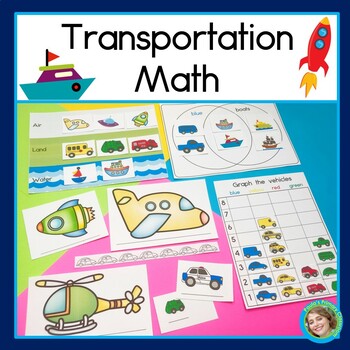
 Transportation Math 
Maybe your budget won't allow for manipulatives right now.  (I didn't buy mine new either!)  I've put together some math mats and a collection of paper vehicles to make it easy to incorporate math skills into a transportation unit.

This blog post is packed with transportation themed learning activities and ideas for early childhood learning!
You probably already have puzzles on hand for your kiddos - and if you don't, really, it's time to hit up some garage sales and pick some up.  Puzzles allow children the opportunity to learn to match shapes and colors, to think logically, to manipulate the pieces to develop spacial reasoning skills... and they are also fun!

No transportation unit would be complete without cars and trucks, the kind of transportation that our children have the most experience with. 

This blog post is packed with transportation themed learning activities and ideas for early childhood learning!
 The children have spent a lot of time "driving" the big trucks around the backyard.  For the children who really need big body play, bending over to hold a truck, and then running full tilt through the grass is pure joy.  When we're done running, we may as well have a car wash, and clean those vehicles up!  (Do you hear the music for "Working at the car wash" in your head now?  Yes, we sang it while we worked!)
This blog post is packed with transportation themed learning activities and ideas for early childhood learning!
 Another favorite play item that the children love enough to wear out, is our huge cardboard tubes.  People often ask where I got these, as there are so many great ways to use them, but it's not the kind of item you run to the craft store for.  No.  These were scavenged from the curb when neighbors had new carpet installed - the carpet comes wrapped on these awesome tubes.  Silly neighbors, they didn't know what the tubes are for, and tossed them out. (If you work with children long enough, I think you lose all sense of pride, and start picking up learning materials where-ever you find them.)
This blog post is packed with transportation themed learning activities and ideas for early childhood learning!
These kiddos are rolling toy cars and balls down the tubes.  It's great fun to put them in the top of the tube, then race to the bottom to see them magically appear!
This blog post is packed with transportation themed learning activities and ideas for early childhood learning!
 Here are the same small cars and some construction vehicles, and the children thoroughly enjoying moving some soil around with the trucks.  This was lovely sensory play, pretend, and an opportunity to work on co-operation with our friends, as the children built "road blocks", made mountains, and even buried trucks.
This blog post is packed with transportation themed learning activities and ideas for early childhood learning!
You probably also have bikes for your children, another great big body play opportunity with a transportation theme.  I have the kids wear helmets, not only for safety, but also because our state has a helmet law, and I do believe in starting out as you intend to continue.  Why let a toddler ride without one, then suddenly try to make them wear it later?  Chances are, they'll resist.  My kiddos know that there is not only no riding without a helmet, but you can't even claim a bike until your helmet is on.  Wow, do they move fast to get their helmets!
This blog post is packed with transportation themed learning activities and ideas for early childhood learning!


Trains, trains, trains!  We love trains! Trains sets, block trains, train crafts, and of course, real trains!  I like to approach each theme with a variety of experiences, so there is something that's just right for each child. 
This blog post is packed with transportation themed learning activities and ideas for early childhood learning!

This blog post is packed with transportation themed learning activities and ideas for early childhood learning!

This blog post is packed with transportation themed learning activities and ideas for early childhood learning!

This blog post is packed with transportation themed learning activities and ideas for early childhood learning!

Here are a few more vehicle ideas.  I've created an "ambulance" from a children's wheeled cart and some posterboard.  When we learn about the letter A, they drive the ambulance and say "aa-aa  aa-aa" (an ambulance sound) as they drive it.  This idea came from a brilliant presenter and author many years ago.  I recently gave the book to another provider, and the name eludes me right now.  I will remember and post it here!
This blog post is packed with transportation themed learning activities and ideas for early childhood learning!
 I found the tractor at funhandprintartblog.com.  Don't you love having so many wonderful ideas at your fingertips?  I so love the internet!  (I'll age myself for a moment.  When I was a teen, the thing I desperately desired was an encyclopedia set, so that when I wanted to find something out, I could just do it, rather than waiting for the public library to open, and walking there to look it up in the encyclopedia!  Okay, dated myself, and revealed my nerdiness.)
This blog post is packed with transportation themed learning activities and ideas for early childhood learning!

Another vehicle the kiddos are all familiar with is the bus.  This is a great thing to talk about when we're reading the Pigeon books by Mo Willems.  I was lucky enough to find a fun Don't Let The Pigeon Drive the Bus board game last year, and the kids LOVED it.  Board games are a great way to practice taking turns, counting spaces to move, following directions, and cooperating with a group.
This blog post is packed with transportation themed learning activities and ideas for early childhood learning!
How have I not mentioned food yet?!  Food is another great way to get children's attention and interest.  Coupled with this obviously sweet bus treat picture, that sounds nutritionally and educationally dreadful.  I promise I don't mean bribing or rewarding children with calorie laden junk, (although we do occasionally enjoy a treat).  I'm thinking of food, and particularly food preparation, as another high interest, multisensory approach to learning.  When we made our bus treat (graham cracker, frosting, rollos for wheels, chocolate squares for windows, candy for stop sign) we talked about colors and shapes, and the children worked on fine motor skills and following directions to put their treat together.

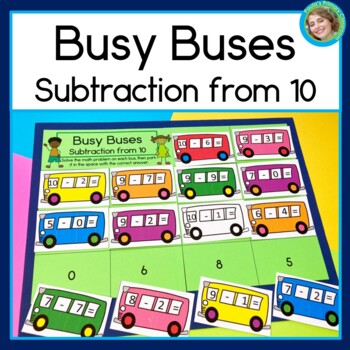
Here's a bus themed activity that I created to work on subtraction skills...
Busy Buses
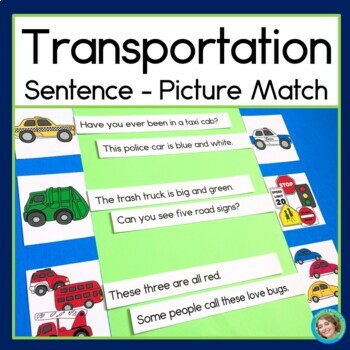
and for children who are beginning to read...
Transportation Sentence Picture Match

I haven't mentioned ships and boats and submarines yet.  Here's an adorable hand print that Ms. Julie came up with for the letter Y.  It's the only water-faring vehicle I can remember doing anything for! 
This blog post is packed with transportation themed learning activities and ideas for early childhood learning!
I haven't gathered any on my Pinterest Transportation Board either,


so I can see that I'm going to have to work on that.  Do you have any favorite transportation ideas you'd like to share?  Please leave it in the comments below.  Thank you for stopping by Paula's Preschool and Kindergarten!