Welcome to Paula's Primary Classroom! This blog is where I share ideas for teaching and learning with families, friends and other early childhood educators. Please don't use the photos or text of this blog without permission, but please do use any ideas you find useful. Thank you for stopping by!
Showing posts with label mystery pictures. Show all posts

Wednesday, March 4, 2020

Help! How should I teach my child to read?


Parenting is hard - maybe the hardest job there is!  Our children are ever changing, ever growing, ever evolving, needing different things of us.  Add a little parental sleep deprivation and a thousand other responsibilities, and how on earth are we to manage it all?

The good news is that you are already your child's first teacher!  They have or will learn to talk, walk, feed themselves and most importantly, what kind of person to be - by watching you!

Someone is learning to be a person by watching you from Paula's Primary Classroom blog


Still, there are things we want to help our children learn that we don't necessarily know enough about to be sure we're doing it "right".  Reading is one of those things, so today I want to share some ideas that can help you teach your child from home.

 (Disclaimer:This post contains affiliate links. I earn a small commission each time someone makes a purchase using one of my links, which helps to support the blog.  All opinions are my own and I only promote brands and products that I have used myself and truly love.)

The most important thing you can do to help your child learn to read is read yourself.  Let them see you reading books and magazines, point out the signs on the freeway and storefronts, let them know that reading is important to you, and read to them.  There's nothing as powerful as snuggling up together with a book and enjoying some time together!

There is no app to replace your lap from Paula's Primary Classroom blog

Learning to read and write is not a quick process, and just like walking and talking, our children go through different stages along the way.  The things we do to help them are different at each stage, so let's look at some of those steps.

Letter learning
There's more to this than just singing the ABC song, although that is a great place to start!  Before they can read, children need to know what letters look and sound like, as well as the name of each letter. 


A great introduction to letter learning is to point out the first letter in your child's name where ever you see it, and to encourage them to find it too.  Have them look for "their letter" while you're driving, when you read with them, in the grocery store, on the cereal box.  Introduce other letters as they're interested in learning more.

It's important to remember that learning is fun!  If your child is tired of a book, tired of a game, or tired of learning, move on to other things for a while.  

We want our children to choose to read and learn, not to see it as a chore.  Forget the flashcards and worksheets unless your little one truly loves them, and instead put magnetic letters on your refrigerator, foam letters in the bathtub, and have crayons, pencils and markers to draw and write with together!

Is your child asking for more?  Check out these basic skill board games that turn letter practice and other basic skills into a game you play together,
https://www.teacherspayteachers.com/Product/Ready-For-Kindergarten-Games-for-Basic-Skills-2007144
play games with letter sounds like these, or try this free St. Patrick's Day word building game where your children match letter tiles to letters.
https://www.teacherspayteachers.com/Product/Saint-Patricks-Day-Word-Building-2392921


Early emergent and emergent readers
This is what educators call that magical stage when children begin to understand that letters and strings of letters (words) have specific sounds and meanings, and they begin to read them.  Every child is different, but most children will become emergent readers some time between preschool and first grade.

Early emergent readers aren't ready for most of the books you see at the library or may have at home.  These kiddos are going to read the pictures as much as the words, and the few words there are on each page will probably be repeated on most pages.  Early childhood educators likely have sets of books like this - and your public library may too.  Emergent Reader: Red is a free example you can download and print out to read with your child, and is part of my Emergent readers for color words set.
https://www.teacherspayteachers.com/Product/Emergent-reader-red-3327294

 
 https://www.teacherspayteachers.com/Product/Color-Word-Emergent-Readers-2727117#show-price-update

If your child is in kindergarten or first grade, their teacher may have asked you to practice "sight words" or "popcorn words".  These are words that either cannot be sounded out (like "why" or "two") or that are used so often that taking time to sound them out will really slow a reader down ("the", "and", "is").

You might think you need flashcards to practice these words - and you certainly can practice them that way, but my students have always preferred games like Polar Bear Sight Words and Three Little Pigs Sight Words for practicing.

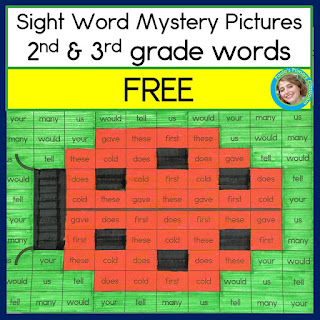
If your child enjoys coloring, or you need them to practice without you for a short time, sight word mystery pictures can be fun too!  These are worksheets you can print out, and your child can read the sight words and color by code.  As they color each space, a picture emerges.  Try this FREE fish sight word mystery picture with kindergarten words, or this FREE ladybug sight word mystery picture with 2nd and 3rd grade sight words to see if these are right for you! 

https://www.teacherspayteachers.com/Product/Sight-Word-Worksheets-Ladybug-Mystery-Picture-2nd-and-3rd-grade-FREE-4558136
If you and your child love them, I have many more sight word mystery pictures available at this link, with words for students from kindergarten to third grade.

As they move from early emergent readers to emergent readers, young readers are honing their skills and it's easy to see that they are indeed reading.  They still need lots of adult support, but they've moved beyond sounding out three letter words like "cat" and "dog" and can tackle slightly longer words with more complex spellings.

Help! How should I teach my child to read? blog post from Paula's Primary Classroom

These children are most motivated to read when they're offered something they're interested in, but still need a limited number of words on each page, and a limited vocabulary.  They may love reading Dr. Seuss books, or the Elephant and Piggie series by Mo Willems.  A lot of students at this stage also enjoy reading non-fiction or fables as they begin  "reading to learn" instead of "learning to read".

What if you're still not sure where to start?  Maybe you have more than one child and you want something easy you can do with both of them, perhaps you're really not at all sure where your child is on their reading journey, or you simply want to cover way more than just reading skills.  Good news!  You can cover all of those things while playfully learning and teaching with Bye Bye Summer Slide.
 https://www.teacherspayteachers.com/Product/Summer-Review-Packet-Bye-Bye-Summer-Slide-1857848
It's a HUGE packet, designed to be used at home to practice kindergarten, first and second grade skills.  It includes 4 game boards to print (and your child to color if desired), and cards for sight words, telling time, money, patterns and much more.  You and your child simply choose a game board and which skill you want to practice, grab a dice, and play!  If you have multiple children playing, each one can use their own set of skill cards, so one child might be working on addition and subtraction, while another identifies letters.

Yes, parenting is hard work.  Yes, it takes time and effort to help your child learn.  No, you'll probably never have ALL the answers - but
YOU can help your child learn to read!


Want some more ideas for teaching your children from home?  Click the pictures below to hear from Kelly at An Apple for the Teacher, and Melissa at Peas in a Pod!

https://l.facebook.com/l.php?u=https%3A%2F%2Fapplefortheteach.blogspot.com%2F2020%2F03%2Fhelping-your-child-learn-at-home.html%3Ffbclid%3DIwAR2-Um3utVlSI6MHRAPeymK9RWyye9uIt8ZoDHY0i-KiWCmMsJLe2FedEKQ&h=AT2CG4OIYOn5ynPMnJS3sEl0_vMIimWHWFyFIDYRlL-I4d4wC60Y2TlEn1Lw7G-Th1cJ3Qf1XYjjDpW5cFDocKod3TTGMob7LsCTKHr5q6rUZxLDAmKzGGLULLH4pPJrg87RCQ

https://peasinapodlessons.com/home-school/?fbclid=IwAR3Nf_Btc1bPJM91AX5oEDKEUa4Yo4cdqb-lWjnaVCazlMPGK65-xQGSbJI


Saturday, January 19, 2019

Here's Hoping You Have a Wonderful Valentine's Day!

Here's Hoping you have a Wonderful Valentines Day: books, activities and ideas from Paula's Primary Classroom
This post contains affiliate links. I earn a small commission each time someone makes a purchase using one of my links, which helps to support the blog.  All opinions are my own and I only promote brands and products that I have used myself and truly love.

February is upon us, and for teachers that means another busy month of learning, and of excited kiddos who are more interested in candy and fun than whatever plans we might have.  Just as we are recovering from the triple hit of Halloween, Thanksgiving and Christmas / Hanukkah, here comes Valentine's Day to throw us off our schedules again.  What is a teacher to do?!

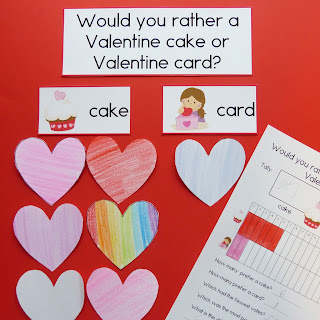
We outsmart them!  When we know our students have a lot to say about something, we harness that energy and turn it into a learning opportunity!  Thinking about candy?  Okay, let's graph that! 

https://www.teacherspayteachers.com/Product/Valentines-Graphs-Horizontal-Vertical-and-Pictographs-2354011
While we're at it, would you rather have Valentine's cookies or candy?  Did you make Valentines Day cards this year? 
https://www.teacherspayteachers.com/Product/Valentines-Graphs-Horizontal-Vertical-and-Pictographs-2354011
Who could resist?!  As we follow up our graphs with questions about how many, how many more/fewer, which is most popular, etc., we're covering lots of math skills just talking about the holiday. 😉

We also read a LOT of books.  Reading together is probably my favorite part of being a teacher!  I love sharing my favorite books, and it's so thrilling when students unlock the magic of reading for themselves!
Here's Hoping you have a Wonderful Valentines Day: books, activities and ideas from Paula's Primary Classroom

Working on rhyming?  Read Some Things Go Together by Charlotte Zolotow, and have your students make up their own rhymes of things that go together.

Passionate about pop-up books? I adore Love Bugs by David A. Carter.

Kindergarten - third grade students with a sense of humor?  Sam's Surprise by David Pelham has a sister making chocolate covered icky things for her brother's birthday - and gets kids laughing and intently listening to figure out the rhymes!

Do some of your students struggle with being kind to each other?  Of course they do, it's part of learning and growing.  Roses Are Pink, Your Feet Really Stink by Diane deGroat might be just the thing to help students make better choices.

Those of you who know me have to be expecting a Pete the Cat book on this list - and sure enough, I enjoy reading Pete the Cat: Valentines Day is Cool with my kiddos!

Another beautiful book that's worth mentioning is The Invisible String.  I found this beautiful story when I was looking to comfort some of my little's who had lost a pet - it's perfect for that, but it's not the focus.  The invisible string is the love that holds us in each other's hearts, even when we're apart.  If that doesn't speak to Valentines Day, what does?! 

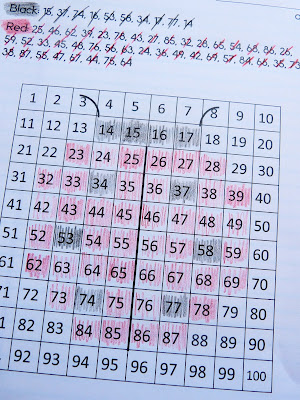
My students and I also really love 100 and 120 chart mystery pictures, so of course I made them for Valentines.  They love figuring out what each mystery picture is, and I love that they're engaged, that it's easy to put them down and come back to them later (what classroom doesn't deal with interruptions?!), and that they're ready to print and go.  Win, win, win!  I've had several teachers tell me they use these in the time leading up to class parties, and that it helps keep their students focused.

https://www.teacherspayteachers.com/Product/Valentines-Day-120-Chart-Mystery-Pictures-4275209

In the last year or so I've started using a variation on my hundreds charts: 100 POCKET charts.  Oh. My. Goodness!  This is a game changer too!  Now my students can get hands on practice in small groups during math centers - and they WANT to complete the pictures.  This is what these puzzles look like - and if you catch yourself wondering what the picture is going to be, chances are good your students will too!
https://www.youtube.com/watch?v=797hTYd34Jc


What are your favorite ways to enjoy Valentines with your students?  I'd love to hear from you in the comments below!  Thanks for stopping by!

https://www.teacherspayteachers.com/Store/Paulas-Primary-Classroom


                                                                                                 Paula


Friday, March 17, 2017

Tips and Tricks for using Mystery Pictures in Your Classroom

 Tips and Tricks for using mystery pictures in your classroom (and 3 freebies!)
My students love mystery pictures.  No, not just a little bit, they really LOVE mystery pictures.  Do yours?  I'm all for anything that motivates my students to do skills practice, so I thought I'd share a few tips I've figured out along our learning journey.

1. For our youngest learners reading the color words can be a challenge - so start out by looking at the puzzle as a group, and have the children color over the words with a matching pencil or crayon.  This also ensures that they HAVE the matching color, and know where it is. 
Tips and Tricks for using mystery pictures in your classroom (and 3 freebies!)

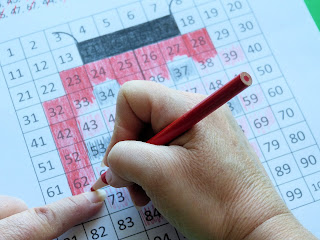
2.  Keeping track of which spaces you've colored can be tricky, especially if there's a long list of numbers.  I teach my students to color one space, then cross out the corresponding clue before going on to the next one.  They can even pick up where they left off after a break, because they can see exactly which clue to tackle next.
Tips and Tricks for using mystery pictures in your classroom (and 3 freebies!)

 3.  Do you have a young perfectionist on your hands, the child that always turns in picture perfect work, but takes  f  o  r  e  v  e  r  to complete anything?  This trick will help you both stay sane:  teach your children to mark the color for each space, but not to color it thoroughly right away.  A quick scribble scrabble in each space will allow them to see how far each color extends, and to color the whole picture at once, rather than one space at a time.
Tips and Tricks for using mystery pictures in your classroom (and 3 freebies!)
 I prefer to color one direction (for me that's up and down)...
Tips and Tricks for using mystery pictures in your classroom (and 3 freebies!)
 ...and then to touch up the unfinished top and bottom with some sideways coloring afterwards.  It neatens everything up. 
Tips and Tricks for using mystery pictures in your classroom (and 3 freebies!)
 4.  Those tricky edges!  You don't have to slow down to color all the way to the lines if you put your finger along the line and use it to stop your pencil. 
Tips and Tricks for using mystery pictures in your classroom (and 3 freebies!)
 5.  Of course, you want to find puzzles with the right level of challenge for your students.  We all know that you'll never ever have a class with everyone at the exact same learning level, so you'll need to differentiate.  My hundreds charts mystery pictures come with 3 skill levels for each puzzle, so it's easy to find one that's just right.  The ladybug mystery picture in these photos is a level (a) puzzle:  the hundreds chart is numbered, there are clues for the picture itself, but no background (so fewer spaces to color), and the text is a little bigger.  Level (b) puzzles include a numbered hundreds chart with clues for all 100 spaces, and regular sized text, while level (c) puzzles come on a blank hundreds chart, so students have to fill that in before solving 100 clues.
Tips and Tricks for using mystery pictures in your classroom (and 3 freebies!)
 6.  You don't have to limit mystery pictures skills practice to numbers!  You can find puzzles for letters...
Tips and Tricks for using mystery pictures in your classroom (and 3 freebies!)
 ...sight words...
Tips and Tricks for using mystery pictures in your classroom (and 3 freebies!) 
Tips and Tricks for using mystery pictures in your classroom (and 3 freebies!)
7.  If coloring this much is an issue, or if your class is just beginning to work on numbers to 100, try doing hundreds chart mystery pictures in your pocket chart!
Tips and Tricks for using mystery pictures in your classroom (and 3 freebies!)
There are even pocket chart mystery pictures for double digit  addition and subtraction:
Tips and Tricks for using mystery pictures in your classroom (and 3 freebies!)

Not sure where to start?  How about some FREE RESOURCES?
https://www.teacherspayteachers.com/Product/100s-chart-mystery-picture-free-1257743

https://www.teacherspayteachers.com/Product/Alphabet-Mystery-Pictures-FREEBIE-1993493

https://www.teacherspayteachers.com/Product/Sight-Word-Mystery-Picture-FREE-3063061


Is there a skill or theme you'd like to see as a mystery picture?  Let me know in the comments, I'm always looking for new ideas for fun learning projects!