Welcome to Paula's Primary Classroom! This blog is where I share ideas for teaching and learning with families, friends and other early childhood educators. Please don't use the photos or text of this blog without permission, but please do use any ideas you find useful. Thank you for stopping by!
Showing posts with label kindergarten. Show all posts

Thursday, April 13, 2023

One of the Best Math Teaching Tools I Rely On

What can you use to teach children not only numbers but also how to add, subtract, count mixed coins, understand numbers in base 10 and more? It's one of my favorite math teaching tools: a simple 100 chart!


I've used 100 chart mystery pictures to help my students learn numbers to 100 for a LONG time... since the mid 90's, but this year I've come to see more and more possibilities. Download a blank 100 chart AND a mystery picture in this FREE resource, then keep reading to learn new ways to use them!

Counting

What do you do when your students can count to 20, but can't consistently count beyond that? You count to 100 while looking at each number you say, to support their developing number sense! You can count to 100 with Jack Hartman, in more than one way, or with Finny the Shark in Super Simple Songs. Do your students prefer a hip hop beat? Try Harry Kindergarten I Can Count to 100! Give your students a blank 100 chart (like the one in the free resource listed above) and have them stand up, move their bodies, and point to the numbers along with one of these songs. This is a great time to walk around and evaluate how well each student is doing, and to help them get back on track if they're struggling.

The next logical step is to take away the music video and have students point and count to 100 without the visual and audio support. Can they do it? They know how to count to 100! Not quite? Keep practicing, they'll get there!

Recognizing and identifying the numbers

 Even if students can count to 100 while pointing to each number, do they REALLY know the numbers, or just rote order? We can find out by mixing it up! This is when I start using 100 chart mystery pictures, like the one featured in the free resource above, with my students. I do this in 2 very different and distinct formats: pocket hundred charts and printed hundreds charts.

Hundreds chart mystery pictures used to only be printables, a mystery to discover by coloring by number, like these images below (yes, there are a kazillion):


When I started making hundreds chart mystery pictures very few of them were differentiated. Sometimes I could find them with a choice of a numbered or completely blank 100 chart, but even that wasn't a guarantee - so I started making my own, with options for students with various skill levels. Almost all of my printable 100s charts come in 3 versions:
 
    Level A: fewer squares to identify and color, larger text, and the numbers usually in order. 
    Level B: 100 squares to identify and color on a pre-numbered chart. Number clues in random 
    order.
    Level C: 100 squares to identify and color on a completely blank chart, with number clues in 
    random order.

My students loved them, and so did other teachers, so I made 100 charts for a LOT of themes! (These aren't all of them).

Later I realized that 100 charts are also wonderful for other skills besides numbers - but I'll get to that!

My real brainstorm invention was:Pocket hundreds chart mystery pictures
Pocket 100 charts have one incredibly important feature that printed mystery pictures don't have: they can be a small group activity! I believe I was the first person to make these awesome math centers! See how they work in this short video pin!


Hundreds pocket charts are awesome for a hands on learning center, and I LOVE that students can work in small groups and help each other to solve them. Pocket chart versions are also great for those students who don't like coloring, or don't have the fine motor strength to complete a whole page of coloring. It's wonderful to listen to students try to guess what the mystery picture is as they work, and if anyone puts a card in the wrong pocket its an easy fix - unlike trying to get colored pencil off the printed page on the worksheet versions! 

The more I used my 100s pocket charts, the more I realized how many ways I could use the larger space for each number that the pocket chart provides:

Let's explore some of these ideas further:

Numbers in base 10

Like so many skills, this one takes some practice to master, so why not practice in a fun way that our students will enjoy - as a mystery picture!

Have you seen a numbers in base 10 printable 100 chart? There's so little room in each square, so the only way to make one would be to have clues on multiple extra pages. If you need 4 pages per student for a printed version, and have 22 students, that's 88 sheets of paper for ONE math assignment. What if you could let every student for years use it, and only needed about 10 pages? So much better!

To make my hundreds pocket charts I've sorted my cards by the color they need to be so I can print them out on card stock, then trim them with a paper cutter. Boom! Math center I can use for years! (This set makes a cockatoo).
 

Expanded form

I love how quickly students usually catch on to expanded form - I usually chant the problem and solution, ie: fifty plus one is fifty one - so I've only made a few charts as expanded form so far. LMK if you need one for a theme I haven't covered yet, I love to hear your requests!
Did you find yourself wondering what the picture would be when you saw this video? Your students will be intrigued too, and keep working to find out!

Counting mixed coins

Can we be real for a minute? Counting mixed coins is hard for kids! They have to identify the coins, know their value, and be able to count by 25, 10, 5 and 1 from any number, and switch between those counting forms. If you've taught this skill you know how hard it can be for many students! This year I'm using my hundreds chart to support counting coins.
 
How? A 100 chart makes an awesome visual support! You'll still need to teach the value of each coin, but try also counting by each amount on the 100 chart. Your students already count by 1's, so that's a breeze. What do they notice when they count by 5's (or nickels)? Try putting nickels on the 5s and 10s as they count, to reinforce the connection. What about dimes? When they count by 10s the next number is always directly below the previous one... does it work if you count on from 25? What about from 36? Do you always just go down one space on the hundreds chart to add 10? Can you count by 10s starting at any number now? Quarters are also fairly easy - they just have to learn and remember 25, 50, 75, one dollar. Not sure what I mean? Check out this short video!

Once students can count the coins separately, start combining them! I know a lot of people start with pennies and nickels because it's easy for students to count by 1's and 5's, but I prefer to start with quarters because I want my students to always start counting from the coin with the most value. Once they can count quarters and dimes, I add in nickels, then pennies.

Wait - what about counting change? Can the 100 chart help with that? Yes! This short YouTube video shows you how! 
 
I LOVE using a 100 chart to support math learning, and I hope you've found a few new ideas about how you can use them too! Next week I'll cover EVEN MORE ways to use them - I hope you'll subscribe so you get notified when it posts. Thanks for joining me, have an awesome week!
 
 
Paula
 

Sunday, August 23, 2020

Are you ready to kick off an awesome year?

Welcome everybody to a new school year!  This one probably looks very different than your usual, and just about everyone I know is feeling the overwhelm.  It's a lot.  Whether your schools are open, have a blended or distance learning plan, or you're home schooling, parenting is a a huge job - and this year everything is just MORE.  

My own children are grown, and I'm not teaching in a classroom right now, but with almost 30 years in early childhood education I have a few resources to pull from.  That's why this year I'm offering a virtual preschool / kindergarten supplement right here on my blog.  If you're looking for some easy ways to add a little more learning to your days, you're in the right place!

Each week I'll focus on one letter.  You can expect to see songs, rhymes, crafts, science and math activities, sensory play, cooking ideas, handprints, directed art projects and more - although maybe not every thing every week.  There will be links to my YouTube page where you can find parenting and teaching tips as well as songs and rhymes.  Expect links to tried and true activities I've blogged about before, mixed in with new ideas for you to try.  Sometimes there will be links to my TeachersPayTeachers store where you can find both free and paid resources.  I'll post a lot of this to social media too - so if you know another parent who might like what I offer please share! 

                                                                                            Let's get started!

                                                                                            Ms. Paula


                                                 Click here to get started with the letter Aa!


A is Absolutely Amazing!

 Ants, apples, alligators and astronauts - it's time for fun while learning about the letter Aa!  When you talk, read, sing and play with your child you're helping them learn.  Preschool and kindergarten children really benefit from hands on activities like singing, finger plays, cooking, painting and more - so here are some of my favorites:

 Activity #1: Songs and rhymes for the letter A

Way Up High in an Apple Tree

Alligator, Alligator

What are they learning?  Rhyme, rhythm, vocabulary, musical pitch, and they're working finger muscles too!


Activity #2: Make applesauce

We all love food, so it's super engaging to make time to let your littles do some basic cooking activities with you!  Applesauce is a great early cooking activity because most children love it, it's a very forgiving recipe, and the steps to make it are easy enough for young children to help.

Children can learn how to cook! 

 To make your applesauce you'll need some apples, a peeler, a butter knife (for your child) a good knife (for you), water, a potato masher, a pot and a stove... a little sugar or cinnamon is optional.  Your child can learn to peel apples by pushing the peeler away from them, to safely hold a butter knife and point the end down to cut the apples (see the picture above), and to put them into a pot.  Add a little water to cover, simmer until soft, then mash with a potato masher or immersible blender.  Add sugar and cinnamon if you want.

What are they learning?  Safe use of kitchen tools, life skills, the satisfaction of preparing their own food, and spending special time with a loved adult.  As you cut the apple you can talk about cutting it in half and into quarters - great math skills!  Did you talk about the peel, flesh, core and stem?  That's science - and so is the changing state of matter that happens when heat causes the apples to soften and change into applesauce.  As  you serve it count how many scoops you put in a bowl - and if they want more, that's coming back for seconds - ordinal numbers.

 Extend the learning fun by having your child write the letter Aa in the applesauce.  Simply put a small amount of applesauce on a plate, gently shake the plate to spread it evenly, and then let your child write in it.  If they do a great job, they get to lick their finger.  Gently shake the plate to reset, and write again!


Activity #3:  Hand prints


Hand prints from our little ones are something that we'll treasure forever - trust me on this one!  I had my children make their own alphabet books with hand and foot prints, by doing one each week.  I'm going to carry that over here for you, and if you can do one a week, you'll have a new favorite alphabet book!

I have the children hold out a hand for me to paint - and we talk about how the paint feels (cool, slippery, slimy, funny?) as I apply the paint.  Next we turn their hand over and place it on a paper, and I place my hand over theirs and push down firmly.  Finally, we lift their hand straight upwards so it doesn't smear everywhere.  The first few tries might be... interesting... but after a little while almost every child gets into it and masters the art of a good hand print.

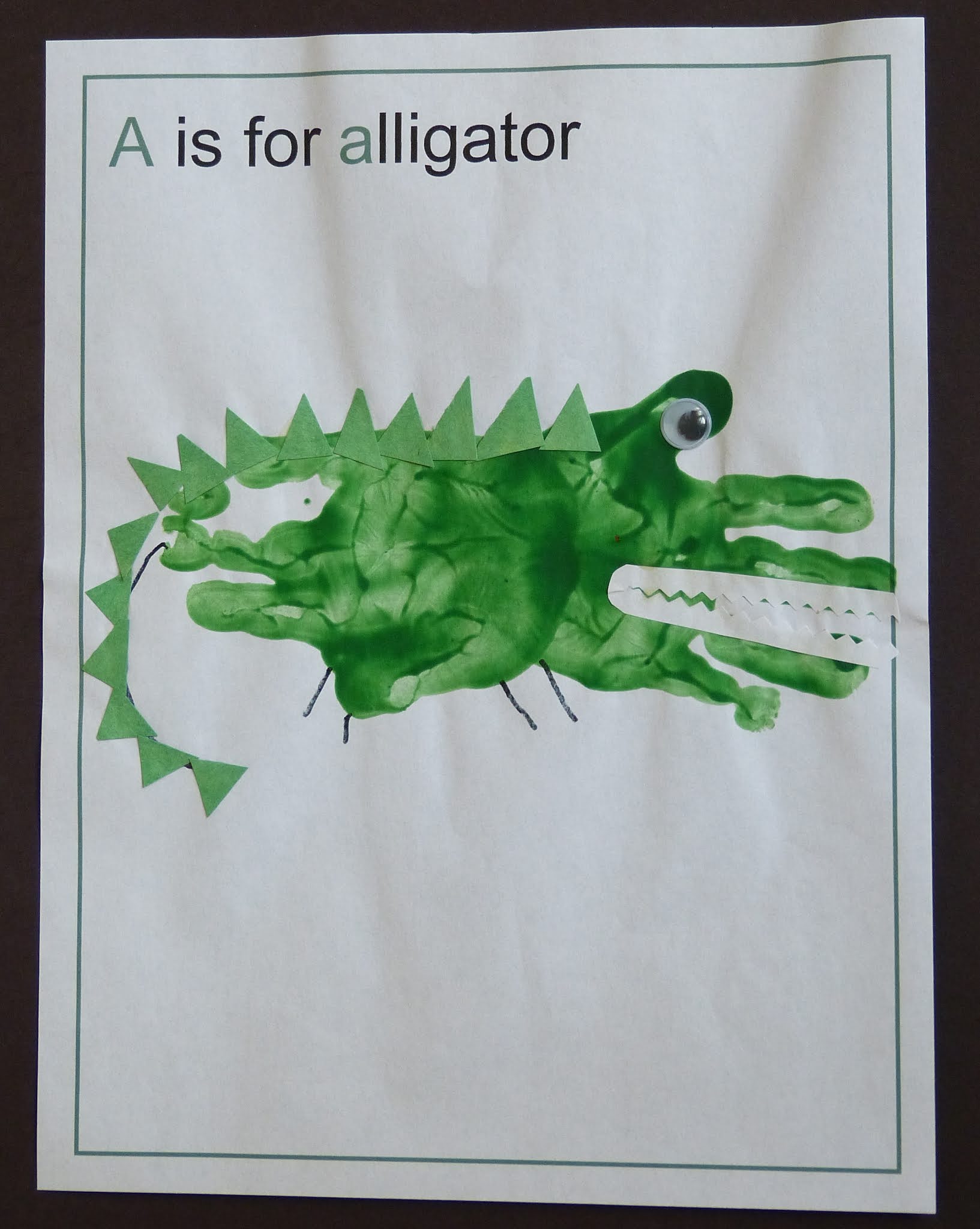
For the alligator print we painted both hands, and overlapped the palms.  We used fancy scissors to cut the zig zag teeth, used a wiggle eye (wiggle eyes make everything cooler!), and added triangles for the back and tail. You are probably already really good with scissors and glue, so try to resist the urge to "help".  Children learn to use scissors by using them, and to use the right amount of glue through practice.  If they're trying, they're learning!

For the angel hand prints we paint the wings first, then make the robe when the paint for the wings is dry.  I take a photo of each child and print it out so I can trim around their face and have them add it to their angels.  

Does your little prefer an alien?  Paint just part of their hand for the print, and let them add  unusual numbers of wiggle eyes and draw on details when the paint is dry. 

What are they learning?  Scissor and glue skills, vocabulary, correlating the initial letter of words to the sound and shape of letter Aa.

 Extend the learning by adding a photo page to their alphabet book.  I like to insert the completed hand prints in a page protector and keep it in a binder.  On the facing page I add a photo of the children doing one of our activities for the letter, with a caption that includes the focus letter.  They love to "read" their books and talk about the letter and the activities, making that letter to sound connection!


Activity #4: Measuring with apples

This is a free download from my TeachersPayTeachers store. It comes with instructions, but basically you print out the pages and join the apples into a long strip.  Tape it to the wall to measure how many apples tall people and things in your house are, or let your child hold it like a ruler to measure.  Young children learn measurement with non-standard units - teacher talk for using various items to measure.
 
What are they learning?  An important concept to introduce is lining up the bottom of apple #1 with the end of the thing you're measuring.  They're practicing counting andnumber recognition -you can also use this as a number line for counting, and your children might also notice the color pattern of the apples.  Which brings us to ...

 
Activity #5 Making patterns


What are they learning?  Patterns, a very basic and essential math skill.  Picking up pompons works their finger muscles, helping their hands grow stronger - an important pre-writing skill.  Younger children may still be learning the color words, or may start counting the circles on the page.  They may ask about the question marks on the page - what question do they need to answer?  This page is included in my Apple Math Centers which is available to purchase and download.


Activity #6: Anansi the Spider! craft to follow up the book by Gerald McDermott
According to McMillan books, "Anansi the Spider is one of the great folk heroes of the world. He is a rogue, a mischief maker, and a wise, lovable creature who triumphs over larger foes."  
 
What are they learning? Folk lore from West Africa, vocabulary and story structure, and as they make their own Anansi or his sons they're cutting, pasting, creating art, and counting 8 legs.


I hope you and your little have enjoyed these activities!  For more apple activities click here, here, and here.  Find some of my favorite apple books here and see how to do a blind taste test with apples here! Join me next week for the letter Bb!

Wednesday, March 4, 2020

Help! How should I teach my child to read?


Parenting is hard - maybe the hardest job there is!  Our children are ever changing, ever growing, ever evolving, needing different things of us.  Add a little parental sleep deprivation and a thousand other responsibilities, and how on earth are we to manage it all?

The good news is that you are already your child's first teacher!  They have or will learn to talk, walk, feed themselves and most importantly, what kind of person to be - by watching you!

Someone is learning to be a person by watching you from Paula's Primary Classroom blog


Still, there are things we want to help our children learn that we don't necessarily know enough about to be sure we're doing it "right".  Reading is one of those things, so today I want to share some ideas that can help you teach your child from home.

 (Disclaimer:This post contains affiliate links. I earn a small commission each time someone makes a purchase using one of my links, which helps to support the blog.  All opinions are my own and I only promote brands and products that I have used myself and truly love.)
The most important thing you can do to help your child learn to read is read yourself.  Let them see you reading books and magazines, point out the signs on the freeway and storefronts, let them know that reading is important to you, and read to them.  There's nothing as powerful as snuggling up together with a book and enjoying some time together!

There is no app to replace your lap from Paula's Primary Classroom blog

Learning to read and write is not a quick process, and just like walking and talking, our children go through different stages along the way.  The things we do to help them are different at each stage, so let's look at some of those steps.

Letter learning
There's more to this than just singing the ABC song, although that is a great place to start!  Before they can read, children need to know what letters look and sound like, as well as the name of each letter. 


A great introduction to letter learning is to point out the first letter in your child's name where ever you see it, and to encourage them to find it too.  Have them look for "their letter" while you're driving, when you read with them, in the grocery store, on the cereal box.  Introduce other letters as they're interested in learning more.

It's important to remember that learning is fun!  If your child is tired of a book, tired of a game, or tired of learning, move on to other things for a while.  

We want our children to choose to read and learn, not to see it as a chore.  Forget the flashcards and worksheets unless your little one truly loves them, and instead put magnetic letters on your refrigerator, foam letters in the bathtub, and have crayons, pencils and markers to draw and write with together!

Is your child asking for more?  Check out these basic skill board games that turn letter practice and other basic skills into a game you play together,
https://www.teacherspayteachers.com/Product/Ready-For-Kindergarten-Games-for-Basic-Skills-2007144
play games with letter sounds like these, or try this free St. Patrick's Day word building game where your children match letter tiles to letters.
https://www.teacherspayteachers.com/Product/Saint-Patricks-Day-Word-Building-2392921


Early emergent and emergent readers
This is what educators call that magical stage when children begin to understand that letters and strings of letters (words) have specific sounds and meanings, and they begin to read them.  Every child is different, but most children will become emergent readers some time between preschool and first grade.

Early emergent readers aren't ready for most of the books you see at the library or may have at home.  These kiddos are going to read the pictures as much as the words, and the few words there are on each page will probably be repeated on most pages.  Early childhood educators likely have sets of books like this - and your public library may too.  Emergent Reader: Red is a free example you can download and print out to read with your child, and is part of my Emergent readers for color words set.
https://www.teacherspayteachers.com/Product/Emergent-reader-red-3327294

 
 https://www.teacherspayteachers.com/Product/Color-Word-Emergent-Readers-2727117#show-price-update

If your child is in kindergarten or first grade, their teacher may have asked you to practice "sight words" or "popcorn words".  These are words that either cannot be sounded out (like "why" or "two") or that are used so often that taking time to sound them out will really slow a reader down ("the", "and", "is").

You might think you need flashcards to practice these words - and you certainly can practice them that way, but my students have always preferred games like Polar Bear Sight Words and Three Little Pigs Sight Words for practicing.

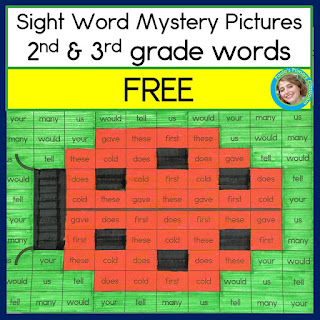
If your child enjoys coloring, or you need them to practice without you for a short time, sight word mystery pictures can be fun too!  These are worksheets you can print out, and your child can read the sight words and color by code.  As they color each space, a picture emerges.  Try this FREE fish sight word mystery picture with kindergarten words, or this FREE ladybug sight word mystery picture with 2nd and 3rd grade sight words to see if these are right for you! 

https://www.teacherspayteachers.com/Product/Sight-Word-Worksheets-Ladybug-Mystery-Picture-2nd-and-3rd-grade-FREE-4558136
If you and your child love them, I have many more sight word mystery pictures available at this link, with words for students from kindergarten to third grade.

As they move from early emergent readers to emergent readers, young readers are honing their skills and it's easy to see that they are indeed reading.  They still need lots of adult support, but they've moved beyond sounding out three letter words like "cat" and "dog" and can tackle slightly longer words with more complex spellings.

Help! How should I teach my child to read? blog post from Paula's Primary Classroom

These children are most motivated to read when they're offered something they're interested in, but still need a limited number of words on each page, and a limited vocabulary.  They may love reading Dr. Seuss books, or the Elephant and Piggie series by Mo Willems.  A lot of students at this stage also enjoy reading non-fiction or fables as they begin  "reading to learn" instead of "learning to read".

What if you're still not sure where to start?  Maybe you have more than one child and you want something easy you can do with both of them, perhaps you're really not at all sure where your child is on their reading journey, or you simply want to cover way more than just reading skills.  Good news!  You can cover all of those things while playfully learning and teaching with Bye Bye Summer Slide.
 https://www.teacherspayteachers.com/Product/Summer-Review-Packet-Bye-Bye-Summer-Slide-1857848
It's a HUGE packet, designed to be used at home to practice kindergarten, first and second grade skills.  It includes 4 game boards to print (and your child to color if desired), and cards for sight words, telling time, money, patterns and much more.  You and your child simply choose a game board and which skill you want to practice, grab a dice, and play!  If you have multiple children playing, each one can use their own set of skill cards, so one child might be working on addition and subtraction, while another identifies letters.

Yes, parenting is hard work.  Yes, it takes time and effort to help your child learn.  No, you'll probably never have ALL the answers - but
YOU can help your child learn to read!


Want some more ideas for teaching your children from home?  Click the pictures below to hear from Kelly at An Apple for the Teacher, and Melissa at Peas in a Pod!

https://l.facebook.com/l.php?u=https%3A%2F%2Fapplefortheteach.blogspot.com%2F2020%2F03%2Fhelping-your-child-learn-at-home.html%3Ffbclid%3DIwAR2-Um3utVlSI6MHRAPeymK9RWyye9uIt8ZoDHY0i-KiWCmMsJLe2FedEKQ&h=AT2CG4OIYOn5ynPMnJS3sEl0_vMIimWHWFyFIDYRlL-I4d4wC60Y2TlEn1Lw7G-Th1cJ3Qf1XYjjDpW5cFDocKod3TTGMob7LsCTKHr5q6rUZxLDAmKzGGLULLH4pPJrg87RCQ

https://peasinapodlessons.com/home-school/?fbclid=IwAR3Nf_Btc1bPJM91AX5oEDKEUa4Yo4cdqb-lWjnaVCazlMPGK65-xQGSbJI


Sunday, March 10, 2019

Simply the Best of the Wild, Wild West


Howdy friends! Texas Public Schools week just finished up, so I thought I’d share some of the books and activities we’ve enjoyed as we learn about Texas and the Old West!
Simply the Best of the Wild, Wild West from Paula's Primary Classroom

I was excited to discover a Wild West story time kit at my local public library.  Have you checked to see what kind of resources are available in yours?  This kit included 7 picture books, a felt story for Click Clack Moo, and a horse puppet.   
Simply the Best of the Wild, Wild West from Paula's Primary Classroom

My kiddos LOVED the felt story and the puppet the best!  Here are some of the highlights, including library books and my own personal collection:
Simply the Best of the Wild, Wild West from Paula's Primary Classroom
Cowboy Camp, by Tammi Sauer.  In this story the unlikely hero, Avery, doesn’t like eating beans, is allergic to horses, and gets rope burn from holding a lasso.  Fortunately for everyone, Avery is able to outsmart the villain, and saves the day.  I LOVED putting on my best western accent… plus jeans, hat, vest and boots… to read this story!  The children really got into it too.

 Simply the Best of the Wild, Wild West from Paula's Primary Classroom
Since cowboys aren’t only boys, I wanted to include I Want To Be A Cowgirl, by Jeanne Willis.  It’s a quick read, perfect for kindergarten and preschool children, and so important for including girls!  

Simply the Best of the Wild, Wild West from Paula's Primary Classroom
If you’re teaching in Texas you’re sure to teach your students about armadillos.  In the past I’ve read Armadillo Rodeo by Jan Brett, and It’s an Armadillo! By Bianca Lavies. 

Simply the Best of the Wild, Wild West from Paula's Primary Classroom
 While I’ll probably still read those sometimes, I discovered another fun book to teach facts about armadillos: Don’t Ever Cross That Road!, by Conrad J. Storad.  It’s told by an armadillo teacher to his class of young armadillos, and includes lots of facts about them.  It’s the not crossing the road part that anyone who’s driven much in Texas can relate to. (When they’re scared armadillos jump straight up, which doesn’t end well when they’re scared by an oncoming vehicle.)


 Simply the Best of the Wild, Wild West from Paula's Primary Classroom
The Gingerbread Cowboy by Janet Squires is a variation on the Gingerbread Man, with a Southwest feel.  The gingerbread cowboy is made by the rancher’s wife, and is chased by desert and ranch animals: a horned lizard, roadrunner, javelinas, longhorns, and cowboys – before being ultimately tricked by a coyote. This was a fun way to review those animals while anticipating the familiar story in a new setting!

Simply the Best of the Wild, Wild West from Paula's Primary Classroom
Waynetta and the Cornstalk  by Helen Ketteman is another fairy tale variation your students are sure to love! It’s close enough to Jack and the Beanstalk to compare and contrast with your students, with plenty of Texan tidbits thrown in: chicken-fried steak, a magic lasso, a giant’s wife who declares Waynetta is “purty as a bluebonnet” and a tiny longhorn cow that makes solid gold cowpats.  If that’s not a recipe for student engagement, I don’t know what is!

Of course we also learned about Texas symbols with this reading center:
https://www.teacherspayteachers.com/Product/Wild-West-Sentence-Picture-Match-Reading-Center-1764543

…and with this Texas Bingo game and posters.  
https://www.teacherspayteachers.com/Product/Texas-Symbols-Bingo-1688085

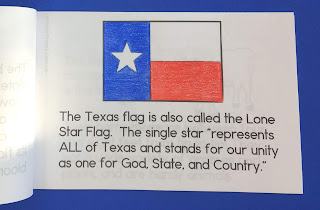
This Texas State Symbols booklet was lovely on our desks for Open House night, and includes 3 versions, so it was easy to make sure every child had one at an appropriate reading level.
https://www.teacherspayteachers.com/Product/Texas-Symbols-Book-3-Differentiated-Guided-Readers-2950256

I also found this adorable cowboy poem and felt board, which makes a great introduction to any cowboy activity:
Simply the Best of the Wild, Wild West from Paula's Primary Classroom

I hope you’ll check out some of these books, and I’d love to hear what new Texan / Wild West books you’ve discovered too!   Let me know in the comments below!

Happy spring y’all!

Saturday, October 22, 2016

Teaching Math on a Budget

Teaching Math on a budget, by Paula's Preschool and Kindergarten
 Okay, right off the bat, I know we're pretty much all on a budget - who isn't?!  If you are teaching young children, chances are good that you supply a lot of the materials you use in your classroom, and it can really add up!  Today I thought I'd share a few ideas that I've used to make my own teaching resources for little or no money!

Large graphs for children to work on:
Teaching Math on a budget, by Paula's Preschool and Kindergarten
Materials required: a large piece of cardboard, approximately the size of poster board, a yard stick and a marker.  (You absolutely could buy poster board, or if you shop at a warehouse store, try asking if you can have some of the huge pieces of cardboard they use on pallets of cereal to separate the layers.)
Time to make it: 10 minutes tops
What to do: I measured and marked 1.5" intervals along each edge of the cardboard, then used the yardstick to draw lines between the marks.  I wrote numbers on one axis, and ta-da! One large graph.

Venn Diagrams:
Teaching Math on a budget, by Paula's Preschool and Kindergarten
 Materials required: a large piece of cardboard, a large bowl or plate to trace around and a marker.
Time to make it: less than 5 minutes
What to do: Turn your bowl or plate face down, off center on your cardboard.  Trace the rim with the marker.  Move the plate over to the other side of your cardboard, leaving a large area of overlap from the first circle.  Trace it again.

Sorting trays:
Teaching Math on a budget, by Paula's Preschool and Kindergarten
Materials required: a divided tray, I got this one from a dollar store.  I've also used trays from fruit/vegetable/cookie platters, and those are free - you just have to remember to either save them yourself, or to ask your families to donate them if they use them.
What to do: nothing more!
Prep time: This depends on how long you browse at the dollar store!  ;-)

What about manipulatives: the small parts the children are working with.  We all know that those plastic dinosaurs and bugs aren't cheap. What can you do?

Save those lids, corks, bread ties, etc.  I keep a container in a cupboard in my kitchen, and every time there's a bread tie or a cork, I toss it directly in there.  Lids from food containers I put in the cutlery holder of my dishwasher first, and save them when they're clean.  You may also find some awesome lids in the bathroom or laundry room, just save them instead of tossing them out.
Teaching Math on a budget, by Paula's Preschool and Kindergarten
 Look in your junk drawer.  Okay, maybe you're perfect, and you don't have a junk drawer, but I'm guessing that somewhere in your home there's a catch-all spot full of amazing little things.  Parts to that one toy your kids had a few years ago, party favors they never even played with, assorted blocks, plastic bits and bobs, rings, craft supplies, tokens from that game place you never go to anymore...  Just be sure to consider the children who will be using these manipulatives, do you need to think about possible choking hazards?  Sharp edges?  Be selective about what will work for your students.
Teaching Math on a budget, by Paula's Preschool and Kindergarten
 You may also have (or know someone who has) a tin of buttons, or beads, or maybe an avid crafter with a lot of left over odds and ends.  Maybe there's a box in the garage with odd nuts and bolts, or old keys, or... go look!  Once you start thinking about and noticing things that are often considered throw aways, you'll find resources all over the place!

So how can you store all this stuff?  Plastic storage containers can be quite expensive, especially if you have a whole bunch of these collections going on!  Check your pantry and your recycling bin!  This is the container I keep in my kitchen to store those lids and corks - it originally had cashews in it, but when the food was eaten, the container got a new life, storing manipulatives.  Many foods come in resealable and reusable containers, everything from lunch meats to rice, fresh salad greens to soup.  If there's something in a useful container that your family uses regularly, you can save them and even end up with a matching set!
Teaching Math on a budget, by Paula's Preschool and Kindergarten
 Still not sure you can find a nice variety of things for your kiddos to sort?  Go outside!  Here are some leaves that are in my yard right now.  I see different colors, sizes and shapes.  How else are they the same?  How else are they different?
Teaching Math on a budget, by Paula's Preschool and Kindergarten
 Okay, so maybe you don't have time to go outside and collect leaves and things for your children to use.  Not to worry, put the kids to work!  Here I've used a strawberry punnet as a collecting box for acorns.  You can see we found some in different sizes, shapes and colors.  There are acorns with holes, broken ones, whole acorns, acorns with and without caps, some that are still connected to each other, and some that aren't... there are so many ways we could sort, graph or put these on a Venn Diagram!
Teaching Math on a budget, by Paula's Preschool and Kindergarten
I hope you can use some of these ideas in your classroom!  If you have another tip for teaching math on a budget, I'd love to hear it!