Welcome to Paula's Primary Classroom! This blog is where I share ideas for teaching and learning with families, friends and other early childhood educators. Please don't use the photos or text of this blog without permission, but please do use any ideas you find useful. Thank you for stopping by!
Showing posts with label literacy. Show all posts

Wednesday, March 4, 2020

Help! How should I teach my child to read?


Parenting is hard - maybe the hardest job there is!  Our children are ever changing, ever growing, ever evolving, needing different things of us.  Add a little parental sleep deprivation and a thousand other responsibilities, and how on earth are we to manage it all?

The good news is that you are already your child's first teacher!  They have or will learn to talk, walk, feed themselves and most importantly, what kind of person to be - by watching you!

Someone is learning to be a person by watching you from Paula's Primary Classroom blog


Still, there are things we want to help our children learn that we don't necessarily know enough about to be sure we're doing it "right".  Reading is one of those things, so today I want to share some ideas that can help you teach your child from home.

 (Disclaimer:This post contains affiliate links. I earn a small commission each time someone makes a purchase using one of my links, which helps to support the blog.  All opinions are my own and I only promote brands and products that I have used myself and truly love.)

The most important thing you can do to help your child learn to read is read yourself.  Let them see you reading books and magazines, point out the signs on the freeway and storefronts, let them know that reading is important to you, and read to them.  There's nothing as powerful as snuggling up together with a book and enjoying some time together!

There is no app to replace your lap from Paula's Primary Classroom blog

Learning to read and write is not a quick process, and just like walking and talking, our children go through different stages along the way.  The things we do to help them are different at each stage, so let's look at some of those steps.

Letter learning
There's more to this than just singing the ABC song, although that is a great place to start!  Before they can read, children need to know what letters look and sound like, as well as the name of each letter. 


A great introduction to letter learning is to point out the first letter in your child's name where ever you see it, and to encourage them to find it too.  Have them look for "their letter" while you're driving, when you read with them, in the grocery store, on the cereal box.  Introduce other letters as they're interested in learning more.

It's important to remember that learning is fun!  If your child is tired of a book, tired of a game, or tired of learning, move on to other things for a while.  

We want our children to choose to read and learn, not to see it as a chore.  Forget the flashcards and worksheets unless your little one truly loves them, and instead put magnetic letters on your refrigerator, foam letters in the bathtub, and have crayons, pencils and markers to draw and write with together!

Is your child asking for more?  Check out these basic skill board games that turn letter practice and other basic skills into a game you play together,
https://www.teacherspayteachers.com/Product/Ready-For-Kindergarten-Games-for-Basic-Skills-2007144
play games with letter sounds like these, or try this free St. Patrick's Day word building game where your children match letter tiles to letters.
https://www.teacherspayteachers.com/Product/Saint-Patricks-Day-Word-Building-2392921


Early emergent and emergent readers
This is what educators call that magical stage when children begin to understand that letters and strings of letters (words) have specific sounds and meanings, and they begin to read them.  Every child is different, but most children will become emergent readers some time between preschool and first grade.

Early emergent readers aren't ready for most of the books you see at the library or may have at home.  These kiddos are going to read the pictures as much as the words, and the few words there are on each page will probably be repeated on most pages.  Early childhood educators likely have sets of books like this - and your public library may too.  Emergent Reader: Red is a free example you can download and print out to read with your child, and is part of my Emergent readers for color words set.
https://www.teacherspayteachers.com/Product/Emergent-reader-red-3327294

 
 https://www.teacherspayteachers.com/Product/Color-Word-Emergent-Readers-2727117#show-price-update

If your child is in kindergarten or first grade, their teacher may have asked you to practice "sight words" or "popcorn words".  These are words that either cannot be sounded out (like "why" or "two") or that are used so often that taking time to sound them out will really slow a reader down ("the", "and", "is").

You might think you need flashcards to practice these words - and you certainly can practice them that way, but my students have always preferred games like Polar Bear Sight Words and Three Little Pigs Sight Words for practicing.

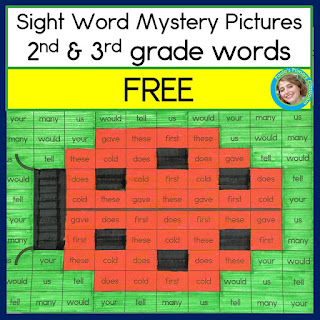
If your child enjoys coloring, or you need them to practice without you for a short time, sight word mystery pictures can be fun too!  These are worksheets you can print out, and your child can read the sight words and color by code.  As they color each space, a picture emerges.  Try this FREE fish sight word mystery picture with kindergarten words, or this FREE ladybug sight word mystery picture with 2nd and 3rd grade sight words to see if these are right for you! 

https://www.teacherspayteachers.com/Product/Sight-Word-Worksheets-Ladybug-Mystery-Picture-2nd-and-3rd-grade-FREE-4558136
If you and your child love them, I have many more sight word mystery pictures available at this link, with words for students from kindergarten to third grade.

As they move from early emergent readers to emergent readers, young readers are honing their skills and it's easy to see that they are indeed reading.  They still need lots of adult support, but they've moved beyond sounding out three letter words like "cat" and "dog" and can tackle slightly longer words with more complex spellings.

Help! How should I teach my child to read? blog post from Paula's Primary Classroom

These children are most motivated to read when they're offered something they're interested in, but still need a limited number of words on each page, and a limited vocabulary.  They may love reading Dr. Seuss books, or the Elephant and Piggie series by Mo Willems.  A lot of students at this stage also enjoy reading non-fiction or fables as they begin  "reading to learn" instead of "learning to read".

What if you're still not sure where to start?  Maybe you have more than one child and you want something easy you can do with both of them, perhaps you're really not at all sure where your child is on their reading journey, or you simply want to cover way more than just reading skills.  Good news!  You can cover all of those things while playfully learning and teaching with Bye Bye Summer Slide.
 https://www.teacherspayteachers.com/Product/Summer-Review-Packet-Bye-Bye-Summer-Slide-1857848
It's a HUGE packet, designed to be used at home to practice kindergarten, first and second grade skills.  It includes 4 game boards to print (and your child to color if desired), and cards for sight words, telling time, money, patterns and much more.  You and your child simply choose a game board and which skill you want to practice, grab a dice, and play!  If you have multiple children playing, each one can use their own set of skill cards, so one child might be working on addition and subtraction, while another identifies letters.

Yes, parenting is hard work.  Yes, it takes time and effort to help your child learn.  No, you'll probably never have ALL the answers - but
YOU can help your child learn to read!


Want some more ideas for teaching your children from home?  Click the pictures below to hear from Kelly at An Apple for the Teacher, and Melissa at Peas in a Pod!

https://l.facebook.com/l.php?u=https%3A%2F%2Fapplefortheteach.blogspot.com%2F2020%2F03%2Fhelping-your-child-learn-at-home.html%3Ffbclid%3DIwAR2-Um3utVlSI6MHRAPeymK9RWyye9uIt8ZoDHY0i-KiWCmMsJLe2FedEKQ&h=AT2CG4OIYOn5ynPMnJS3sEl0_vMIimWHWFyFIDYRlL-I4d4wC60Y2TlEn1Lw7G-Th1cJ3Qf1XYjjDpW5cFDocKod3TTGMob7LsCTKHr5q6rUZxLDAmKzGGLULLH4pPJrg87RCQ

https://peasinapodlessons.com/home-school/?fbclid=IwAR3Nf_Btc1bPJM91AX5oEDKEUa4Yo4cdqb-lWjnaVCazlMPGK65-xQGSbJI


Sunday, January 19, 2020

Brrrrrr! Chilling with Polar Bears

The last time I wrote about polar bears I found very few children's books to include in my post.  This time I found a LOT, and plenty of songs and rhymes too. 

Chilling with Polar Bears blog from Paula's Primary Classroom - books, rhymes, songs and a free download!

This post contains affiliate links. I earn a small commission each time someone makes a purchase using one of my links, which helps to support the blog.  All opinions are my own and I only promote brands and products that I have used myself and truly love.

https://www.amazon.com/gp/product/0062791281?ie=UTF8&tag=paulabeckerma-20&camp=1789&linkCode=xm2&creativeASIN=0062791281

I absolutely fell in love with Sea Bear!  This beautiful new book couples stunning illustrations with some of the most poetic language you'll find - and it's simple enough for young children to understand and connect with.  It starts, 

"Polar bears are patient beasts, as patient as glaciers.  We know how to hope and how to wait.  I learned to be patient long ago from my polar bear mother - "

The story follows a polar bear as it paddles across open ocean, searching for ice or land to stand on.  As the journey goes on, you and your little ones will find yourself aching for land along with the polar bear.  Without ever mentioning conservation, this book absolutely lends itself to further conversation about it.  The text and illustrations show many other Arctic animals along the way, from orca and seals, to narwhal, walrus and sharks.  I cannot recommend it highly enough!

This book also provides a perfect lead in for talking about how polar bears are insulated against the cold by their blubber and fur.  Making a blubber glove to insulate little hands from ice water isn't difficult - and there are instructions for it in this previous post.

https://www.amazon.com/gp/product/1628321156?ie=UTF8&tag=paulabeckerma-20&camp=1789&linkCode=xm2&creativeASIN=1628321156

If you're reading to young children, you'll also love Polar Bears!  Like the other books in this series, it couples beautiful photographs with simple but meaningful text.  Each 2 page spread includes just 1 - 2 sentences about polar bears, which are closely tied to the photographs.  The close text and picture connection is perfect to support emergent readers as they retell or read the pages.  My teacher heart also appreciates the table of contents at the beginning, the labeled picture of a polar bear, and the vocabulary page in the back of the book.  I would absolutely use this book with preschool, kindergarten and first grade.

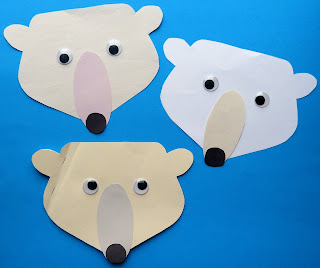
If you want a take home reader about polar bears, check out this craft and booklet I created.  Like Polar Bears (above), each page includes 1-2 simple sentences about polar bears, but with black and white line drawings it's suitable to make a copy for each child to have their own.  (The finished crafts also make a very impressive bulletin board!)
https://www.teacherspayteachers.com/Product/Polar-Bear-Craft-and-Book-2277562


https://www.amazon.com/gp/product/0545485584?ie=UTF8&tag=paulabeckerma-20&camp=1789&linkCode=xm2&creativeASIN=0545485584https://www.amazon.com/gp/product/0439698855?ie=UTF8&tag=paulabeckerma-20&camp=1789&linkCode=xm2&creativeASIN=0439698855

Polar Bear Night and the companion book  Polar Bear Morning are also lovely for young children!  Once again the text is simple and short, and the linocut pictures are easy to see from a short distance - important if you're using it for a story time with a big group.  These books also include other Arctic animals, which I think is important for helping children build their schema of the Arctic.  


I've written before about including tangram puzzles in my teaching, and of course I have a puzzle for polar bears!  This little sweetheart is part of my Polar Tangram set, which makes it easy to incorporate some math learning along with our polar fun.
https://www.teacherspayteachers.com/Product/2D-Shapes-Center-Polar-Animal-Tangrams-3595614
All my tangram puzzles include the shape outline form so my youngest children can manipulate the shapes to match the picture, and a colorful picture version that offers far fewer clues.  I've used these with children aged 3 - 8 and their parents, and it's amazing how engaging and challenging they can be for all ages.


https://www.amazon.com/gp/product/0803738781?ie=UTF8&tag=paulabeckerma-20&camp=1789&linkCode=xm2&creativeASIN=0803738781

My kiddos also enjoyed Please Bring Balloons.  This lovely fantasy story isn't about polar bears per se, but features a beautiful carousel bear that comes to life and transports Emma to a carousel bear rumpus!  I think the only other children's book with a "rumpus" is Sendak's Where the Wild Things Are, and I can see turning on kid friendly music and having a rumpus of our own after reading this book.  This book also makes me want to get out polar bear shapes and a variety of craft materials for children to make their own carousel bears.
Chilling with Polar Bears blog from Paula's Primary Classroom - books, rhymes, songs and a free download!


If you're like me, just reading about something isn't enough - you want to sing and dance and create and extend the learning, right?  I went looking and found some adorable songs and rhymes to share with you, and I have one of my own to share too. 

I wrote this little song a few years ago because so many children (and adults) don't realize that polar bears and penguins don't live in the same place.  Penguins live south of the equator, mostly in the Antarctic, and polar bears are north of the equator, in the Arctic.  Click on the picture to download a printable song page, or click here to hear me sing it on YouTube.com.


https://www.teacherspayteachers.com/Product/Polar-Bears-and-Penguins-Song-FREE-2972278

 I also found these on YouTube.com :

Here's Grizzly bears are big and brown (with verses about grizzlies, polar bears and teddy bears) from JBrary,
and
Rachel Rambach has an original song and motion rhyme Polar Bear.


For a polar bear variation on Teddy Bear, Teddy Bear, check out the Johnson County Library blog, and check out Storytime Hooligans for a beautiful felt and rhyme.

I want to end today's post with a few more book recommendations.  I've focused on books I use for story times with young children, but there are many more lovely books out there!


https://www.amazon.com/gp/product/1452141991?ie=UTF8&tag=paulabeckerma-20&camp=1789&linkCode=xm2&creativeASIN=1452141991

https://www.amazon.com/gp/product/0399260099?ie=UTF8&tag=paulabeckerma-20&camp=1789&linkCode=xm2&creativeASIN=0399260099


Until next time,
Paula


Sunday, March 10, 2019

Simply the Best of the Wild, Wild West


Howdy friends! Texas Public Schools week just finished up, so I thought I’d share some of the books and activities we’ve enjoyed as we learn about Texas and the Old West!
Simply the Best of the Wild, Wild West from Paula's Primary Classroom

I was excited to discover a Wild West story time kit at my local public library.  Have you checked to see what kind of resources are available in yours?  This kit included 7 picture books, a felt story for Click Clack Moo, and a horse puppet.   
Simply the Best of the Wild, Wild West from Paula's Primary Classroom

My kiddos LOVED the felt story and the puppet the best!  Here are some of the highlights, including library books and my own personal collection:
Simply the Best of the Wild, Wild West from Paula's Primary Classroom
Cowboy Camp, by Tammi Sauer.  In this story the unlikely hero, Avery, doesn’t like eating beans, is allergic to horses, and gets rope burn from holding a lasso.  Fortunately for everyone, Avery is able to outsmart the villain, and saves the day.  I LOVED putting on my best western accent… plus jeans, hat, vest and boots… to read this story!  The children really got into it too.

 Simply the Best of the Wild, Wild West from Paula's Primary Classroom
Since cowboys aren’t only boys, I wanted to include I Want To Be A Cowgirl, by Jeanne Willis.  It’s a quick read, perfect for kindergarten and preschool children, and so important for including girls!  

Simply the Best of the Wild, Wild West from Paula's Primary Classroom
If you’re teaching in Texas you’re sure to teach your students about armadillos.  In the past I’ve read Armadillo Rodeo by Jan Brett, and It’s an Armadillo! By Bianca Lavies. 

Simply the Best of the Wild, Wild West from Paula's Primary Classroom
 While I’ll probably still read those sometimes, I discovered another fun book to teach facts about armadillos: Don’t Ever Cross That Road!, by Conrad J. Storad.  It’s told by an armadillo teacher to his class of young armadillos, and includes lots of facts about them.  It’s the not crossing the road part that anyone who’s driven much in Texas can relate to. (When they’re scared armadillos jump straight up, which doesn’t end well when they’re scared by an oncoming vehicle.)


 Simply the Best of the Wild, Wild West from Paula's Primary Classroom
The Gingerbread Cowboy by Janet Squires is a variation on the Gingerbread Man, with a Southwest feel.  The gingerbread cowboy is made by the rancher’s wife, and is chased by desert and ranch animals: a horned lizard, roadrunner, javelinas, longhorns, and cowboys – before being ultimately tricked by a coyote. This was a fun way to review those animals while anticipating the familiar story in a new setting!

Simply the Best of the Wild, Wild West from Paula's Primary Classroom
Waynetta and the Cornstalk  by Helen Ketteman is another fairy tale variation your students are sure to love! It’s close enough to Jack and the Beanstalk to compare and contrast with your students, with plenty of Texan tidbits thrown in: chicken-fried steak, a magic lasso, a giant’s wife who declares Waynetta is “purty as a bluebonnet” and a tiny longhorn cow that makes solid gold cowpats.  If that’s not a recipe for student engagement, I don’t know what is!

Of course we also learned about Texas symbols with this reading center:
https://www.teacherspayteachers.com/Product/Wild-West-Sentence-Picture-Match-Reading-Center-1764543

…and with this Texas Bingo game and posters.  
https://www.teacherspayteachers.com/Product/Texas-Symbols-Bingo-1688085

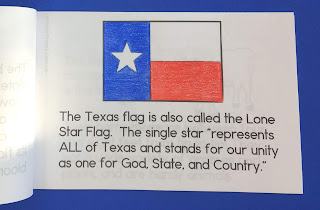
This Texas State Symbols booklet was lovely on our desks for Open House night, and includes 3 versions, so it was easy to make sure every child had one at an appropriate reading level.
https://www.teacherspayteachers.com/Product/Texas-Symbols-Book-3-Differentiated-Guided-Readers-2950256

I also found this adorable cowboy poem and felt board, which makes a great introduction to any cowboy activity:
Simply the Best of the Wild, Wild West from Paula's Primary Classroom

I hope you’ll check out some of these books, and I’d love to hear what new Texan / Wild West books you’ve discovered too!   Let me know in the comments below!

Happy spring y’all!

Wednesday, August 12, 2015

Apple activities

Learning about apples in preschool and kindergarten: fun activities, snacks, projects, graphs and more!
One of my early school memories from growing up in Australia was the alphabet posted on the walls of Mrs. Potts' room.  For each letter, there were a couple of things that started with the letter, doing something, and we sang a song for each.  The tune was always the same, Skip To My Lou - so chances are pretty good that you know it too.  We had "Rats are Running, r r r", "Helicopters Hovering, h h h", "Dolls are dancing, d d d", and of course, "Ants on the apple, a a a".
Learning about apples in preschool and kindergarten: fun activities, snacks, projects, graphs and more!
Mrs. Potts could never have guessed that I would in turn teach those songs to a couple of hundred preschool children in Texas, which I guess goes to show how far our reach as teachers really can go!  "I touch the future, I teach", really takes on a new meaning when you look backwards and see such things - and I guess right now I should be wondering about my reach into the future, and who or what I might have influenced.  I know at least one of my first class of first graders is now an early childhood teacher herself, and I have to say, I was honored when she told me I had influenced her.

The picture above shows where I've gone with those "ants on the apple".  Each of my preschoolers over the years has made their own copy of the alphabet to hang on their walls at home, beginning with ants on the apple.

I provide the children with either a precut construction paper letter, or for those ready to develop their scissor skills, a traced letter.  Apples of course can be green, yellow or red, so I have all 3 colors available, and let the children choose theirs.  As you can see, we add a brown construction paper stem, and a green leaf to make our letter a into an apple, and then glue on plastic ants or finger paint them on.  We sing the ants on the apple song throughout the week, and it really does seem to help reinforce the letter sound connection.  I've often had young learners look at a letter somewhere else and tell me what picture we've created with that letter, an excellent first connection.

In case you're wondering about the upper case A, we paint stamped a green alligator onto it, and glued on the alligator poem (which I am unable to credit, so sorry!):
  Alligator, alligator, long and green.
  Alligator, alligator, teeth so mean.
  He snapped at a minnow, and he snapped at a flea,
  He snapped at a turtle and he snapped at me!
  He caught that minnow, he caught that flea,
  He caught that turtle, but he didn't catch me!


I've blogged previously about having students bring in apples for us to cook with, and then graphing both the day they brought their apples...
Learning about apples in preschool and kindergarten: fun activities, snacks, projects, graphs and more!
 ... and what color apple they brought.
Learning about apples in preschool and kindergarten: fun activities, snacks, projects, graphs and more!

The same link will also tell you all about how we make our applesauce.  I want to add that there is no recipe necessary for applesauce.  I know there are some people who balk at the thought of winging it in the kitchen, but chances are those people wouldn't be comfortable with children doing the cooking either.  :-)  Way back when I first started teaching I was careful to have a recipe, but I've made applesauce enough times with enough children to know it is close to fool proof:  Peel apples.  Cut up apples.  Put in a pot and barely cover with water.  Boil until soft.  Mash or blend until desired smoothness is reached.  Sugar and cinnamon are optional, and usually much appreciated, but not at all required. 
Learning about apples in preschool and kindergarten: fun activities, snacks, projects, graphs and more!
 I've also found that animal crackers or graham crackers make a really nice accompaniment to fresh, warm applesauce!  (Also, you can absolutely serve applesauce in a small cup and let the children "drink" it if you are out of spoons, but don't use the paper cups like those in the picture below, they smush too easily.  Go with the small plastic ones.  And yes, coffee filters make excellent and inexpensive "plates" for those crackers!)
Learning about apples in preschool and kindergarten: fun activities, snacks, projects, graphs and more!

Another fun apple activity we've enjoyed many times over the years is making our Apples On Top classbook:
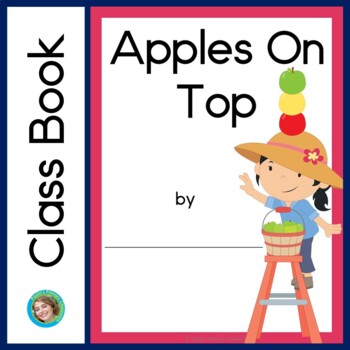
Apples On Top Most of the text for the book is already on the pages, the children add their name, and a numeral, draw themselves, and add apple stickers on top of their heads.  We read Ten Apples Up On Top, by Dr. Seuss to introduce this activity, and then bind the student pages together to create our own class book.
Learning about apples in preschool and kindergarten: fun activities, snacks, projects, graphs and more!
 One of the marvelous things about class books, is that the students have ownership of the books, and want to read and reread them.  Every time we do, we're reinforcing the repetitive text, making it easier for students to read it to themselves, to reread their names and numbers, and to count those apple stickers.  I LOVE how much mileage a simple activity like this can get!

Another high mileage activity I enjoy for our apples unit is our blind taste test.  (You can read more about it here).
Learning about apples in preschool and kindergarten: fun activities, snacks, projects, graphs and more!

Learning about apples in preschool and kindergarten: fun activities, snacks, projects, graphs and more!
Basically we graph which apples the children think they like best, taste 3 or 4 different ones, graph which one they actually like best after tasting, and compare the results.    Some years we write a class experience story about the process, and put the story and graphs in another class book.  We get science, math, writing a "how to", and reading from this one simple activity!

I also try to offer a sensory bin of some kind most weeks.  Unfortunately I don't have any good pictures of our apple sensory play, but you can see some ideas on my pumpkins and apples pinterest board.

I absolutely recommend you collect empty spice containers to add to your sensory play - cinnamon and cloves for apple play - because they add another sense to those you're engaging.  It seems silly (to an adult), but the children I've taught have loved smelling the spice containers, as well as pretending to season things with them.

For super easy sorting activities this week, try putting out red, yellow and green pompons (apples) and red, yellow and green containers for the children to sort them into.  You can make instant math centers with apple tree note pads (from a teacher supply store) with numbers written on them.  Students add the correct number of pompon "apples" to their trees.  You probably have several of your own favorite apple play ideas too!

I hope you and your kiddos get a chance to explore apples too - and that you'll leave a comment and let me know what your favorite apple activity is.  Thanks for stopping by!

P.S.  I didn't mention any apple themed children's books today, but you can read about 7 of my favorites here.